Another deadly attack on Saudi Arabia’s main international airport. Another diplomatic disagreement between Washington and Tehran. Another round of warnings about what could happen next.
And once again, ordinary people are paying the price.
The Middle East is facing a dangerous combination of military escalation and stalled diplomacy as Yemen’s Houthi movement continues attacking Saudi Arabia while Iran signals that Washington’s latest response to its peace conditions is not good enough.
The timing could hardly be worse.
With international aviation disrupted, oil markets watching nervously, and negotiations over the Strait of Hormuz unresolved, the region is confronting a troubling question: How many more attacks will it take before the governments involved find a way to stop this conflict?
🔴 Help keep this independent voice alive and uncensored.
Support independent journalism and help keep Real Raw News going.
👉 Support Chris Wick on GoFundMe
Riyadh Airport Attacked Again as Civilian Casualties Mount
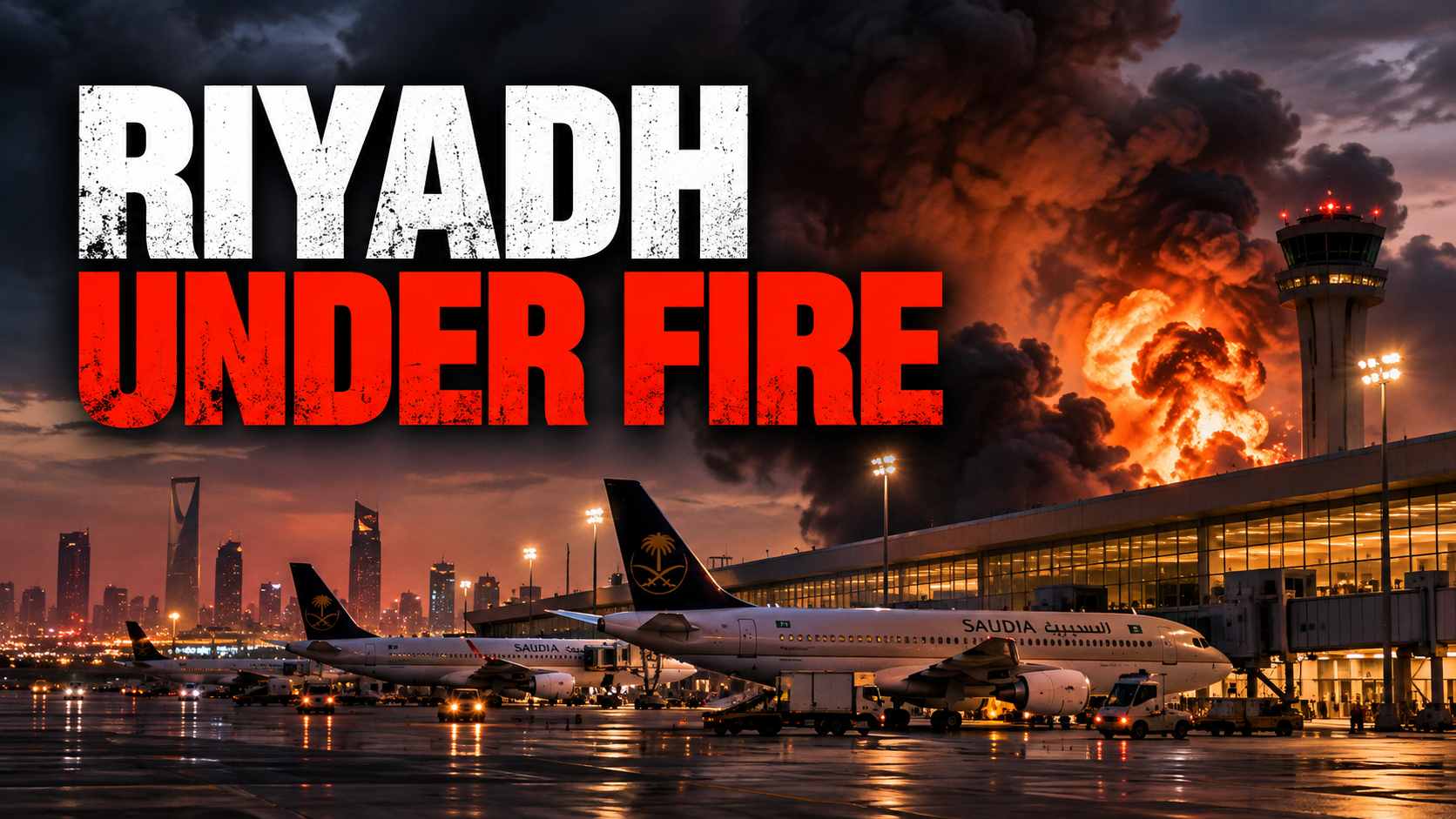
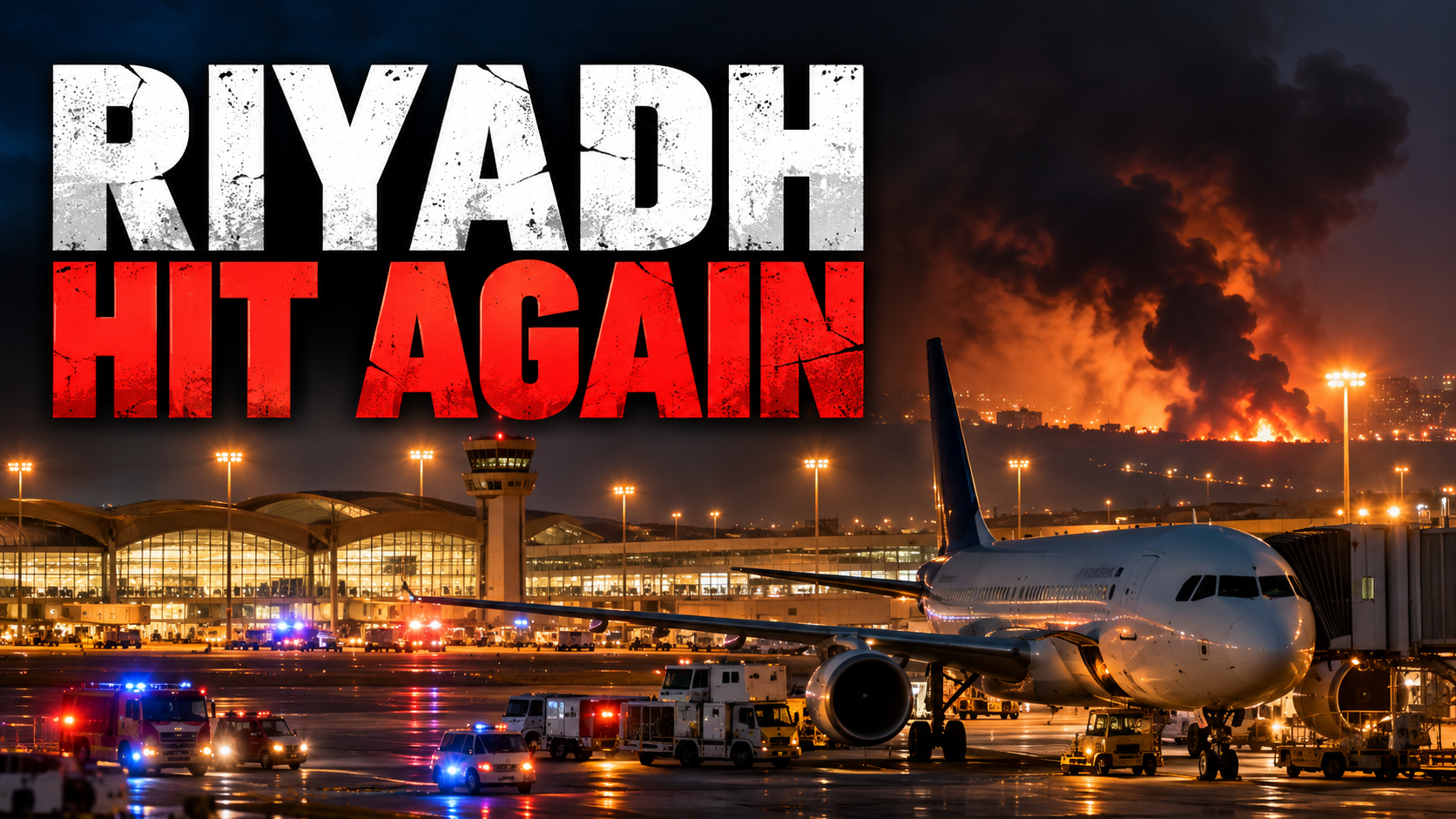
Saudi Arabia’s King Khalid International Airport has suffered another deadly attack, leaving one person dead and 11 others injured.
The latest strike followed an earlier devastating assault on the airport that killed at least 12 people and wounded more than 300, according to reporting by Reuters and other international news organizations.
The attacks have been linked to Yemen’s Houthi movement, which has intensified military operations against Saudi targets.
The latest fatality was reported to be a Pakistani national.
Think about what that means.
An international airport is supposed to be a place where families reunite, workers travel, and ordinary people move between countries.
Instead, passengers and airport employees have found themselves exposed to a regional war they did not choose.
Whatever political or military justification is offered for attacking an airport, the consequences for civilians cannot simply be brushed aside.
The repeated strikes also raise serious questions about the protection of critical infrastructure in a country that has invested heavily in modern aviation, tourism, and international commerce.
Iran Says Washington’s Peace Response Is Inadequate
While Saudi Arabia deals with the consequences of the attacks, diplomatic efforts involving Iran and the United States remain uncertain.
Iranian security official Mohsen Rezaei said Washington had accepted some of Tehran’s seven conditions for an agreement but described the American response as inadequate.
Those conditions are connected to efforts to end the conflict and reopen the strategically important Strait of Hormuz.
Among the publicly reported Iranian demands are an end to hostilities, the lifting of the American naval blockade, and the release of frozen Iranian funds.
The exact status of negotiations remains uncertain, and acceptance of some conditions does not mean a final agreement is close.
That distinction matters.
Governments can spend weeks discussing proposals, exchanging responses, and announcing diplomatic progress while military operations continue elsewhere.
A peace proposal means very little to civilians if the violence continues while politicians argue over the wording.
Washington and Tehran both face difficult decisions. The United States must consider its regional security commitments, while Iran continues pressing for terms it considers necessary to end the conflict.
Neither side has demonstrated that the remaining disagreements can be resolved quickly.
The Strait of Hormuz Remains a Major Pressure Point
One of the most consequential issues in the negotiations is the Strait of Hormuz.
This narrow waterway connects the Persian Gulf with the Gulf of Oman and is one of the world’s most important energy shipping routes.
Disruptions to shipping through Hormuz can affect oil supplies, transportation costs, insurance premiums, and global economic confidence.
For ordinary consumers, the consequences can extend well beyond the Middle East.
Higher energy costs can eventually affect gasoline prices, freight transportation, food distribution, and household expenses.
That is why the negotiations between Iran and the United States matter to people thousands of kilometres away from the conflict.
It is also why the reopening of the strait has become such an important diplomatic objective.
But there is a problem.
When access to an essential international shipping route becomes part of a broader political confrontation, the economic consequences are felt by countries and populations that have little influence over the negotiations.
The longer the uncertainty continues, the more difficult it becomes for businesses and governments to plan around the disruption.
Saudi Arabia Faces a Growing Security and Economic Challenge
The airport attacks are particularly damaging for Saudi Arabia because the kingdom is trying to establish itself as a major international business, tourism, and investment destination.
Riyadh is hosting the World Petroleum Council Energy Congress, bringing together representatives of the international energy industry.
Yet the gathering has been overshadowed by the security situation.
The Financial Times reported that major international energy companies have withdrawn senior executives from the event amid concerns following the attacks.
Saudi Arabia’s leadership has nevertheless continued with the conference.
That sends a message of determination, but it does not eliminate the underlying security problem.
International companies make investment decisions based partly on stability, predictable transportation, and the ability to protect employees.
Repeated attacks on an international airport threaten confidence in all three.
Saudi Arabia now faces the difficult task of responding to the Houthi attacks without triggering an even broader confrontation.
A major retaliatory operation could increase pressure on the Houthis, but it could also produce another round of attacks.
That is the danger of military escalation: every response can become the justification for the next one.
Iran Warns Against Further Escalation in Yemen
Iran has also expressed concern about the growing confrontation on the Arabian Peninsula.
Foreign Ministry spokesperson Esmaeil Baghaei said Tehran was deeply concerned about developments in the region and argued that further escalation would benefit Israel.
That is Iran’s stated position, not an independently established explanation of who benefits from the fighting.
The Houthis are widely described as an Iran-backed movement, but that relationship alone does not establish that Tehran ordered any particular attack.
Distinguishing between political support, military assistance, and direct operational responsibility is essential when examining a conflict involving several governments and armed groups.
What is clear is that the fighting in Yemen has become increasingly connected to the wider regional security crisis.
And the more these conflicts overlap, the harder it becomes to negotiate a settlement that addresses only one battlefield.
A Dangerous Cycle of Attack and Retaliation
There is something deeply troubling about the way this conflict continues to unfold.
One side launches an attack. Another promises retaliation. Diplomatic representatives issue statements. Military commanders prepare their next operations.
Then the process repeats.
Meanwhile, civilians are killed, airports close, businesses lose money, and families are left wondering whether the next missile will land near them.
This is not an argument that every government or armed movement bears identical responsibility for every attack.
Responsibility for specific actions must be established through evidence.
But accountability should not depend on which flag is flying above the military installation or which government happens to be issuing the statement.
Civilian lives do not become less valuable because their deaths are politically inconvenient.
That principle should apply to every government and armed group involved.
What Happens Next Could Affect Far More Than the Middle East
Several developments now deserve close attention.
Saudi Arabia’s response to the airport attacks could determine whether the fighting with the Houthis intensifies further.
The American and Iranian negotiating positions will influence whether the Strait of Hormuz can reopen under an agreed arrangement.
International airlines and energy companies will continue evaluating the security risks associated with operating in the region.
And civilians across the Middle East will remain exposed to the consequences of decisions being made far beyond their control.
None of these outcomes is predetermined.
Diplomatic negotiations could still produce meaningful progress. Military escalation could also undermine whatever progress has already been made.
That uncertainty is precisely what makes the situation so serious.
The Bigger Question Nobody Should Ignore
There is a difference between negotiating peace and creating the conditions in which peace becomes possible.
The first involves statements, proposals, intermediaries, and political demands.
The second requires actual changes on the ground.
Missiles have to stop falling. Civilians have to be protected. Critical transportation routes need to become safe again.
And the governments involved must decide whether their immediate military objectives are worth the continued human and economic consequences.
For now, Riyadh’s airport attacks and the unresolved US-Iran negotiations show how far the region remains from a durable settlement.
The question is no longer simply whether Washington and Tehran can agree on a document. It is whether that agreement, if reached, can help stop the violence spreading across the region.
Because while governments negotiate, civilians are still dying.
And no diplomatic announcement can undo that.
Sources
Al Jazeera — Iran War Live: Riyadh Airport Hit Again; Tehran Says US Reply Inadequate
https://www.aljazeera.com/news/liveblog/2026/10/12/iran-war-live-riyadh-airport-hit-again-tehran-says-us-reply-inadequate
Reuters — Saudi Shares Fall After Second Airport Attack as Gulf Trade Stays Cautious
https://www.reuters.com/world/middle-east/saudi-shares-fall-after-second-airport-attack-gulf-trade-stays-cautious-2026-10-12/
Associated Press — Iran Calls Latest US Response to Proposal Insufficient, and Other Mideast Developments
https://apnews.com/article/baa06588f3ebe6dad93695581f68d3c1
Financial Times — Riyadh Defiant as Houthis Launch New Missile Strikes on Saudi Arabia
https://www.ft.com/content/ad0b6e93-708c-46c6-a1f2-e6248c934faf
The Washington Post — Saudi Arabia Vows Retaliation Against Houthis After Airport Strike
https://www.washingtonpost.com/world/2026/10/11/saudi-arabia-vows-retaliation-against-houthis-after-riyadh-airport-strike/
About the Author