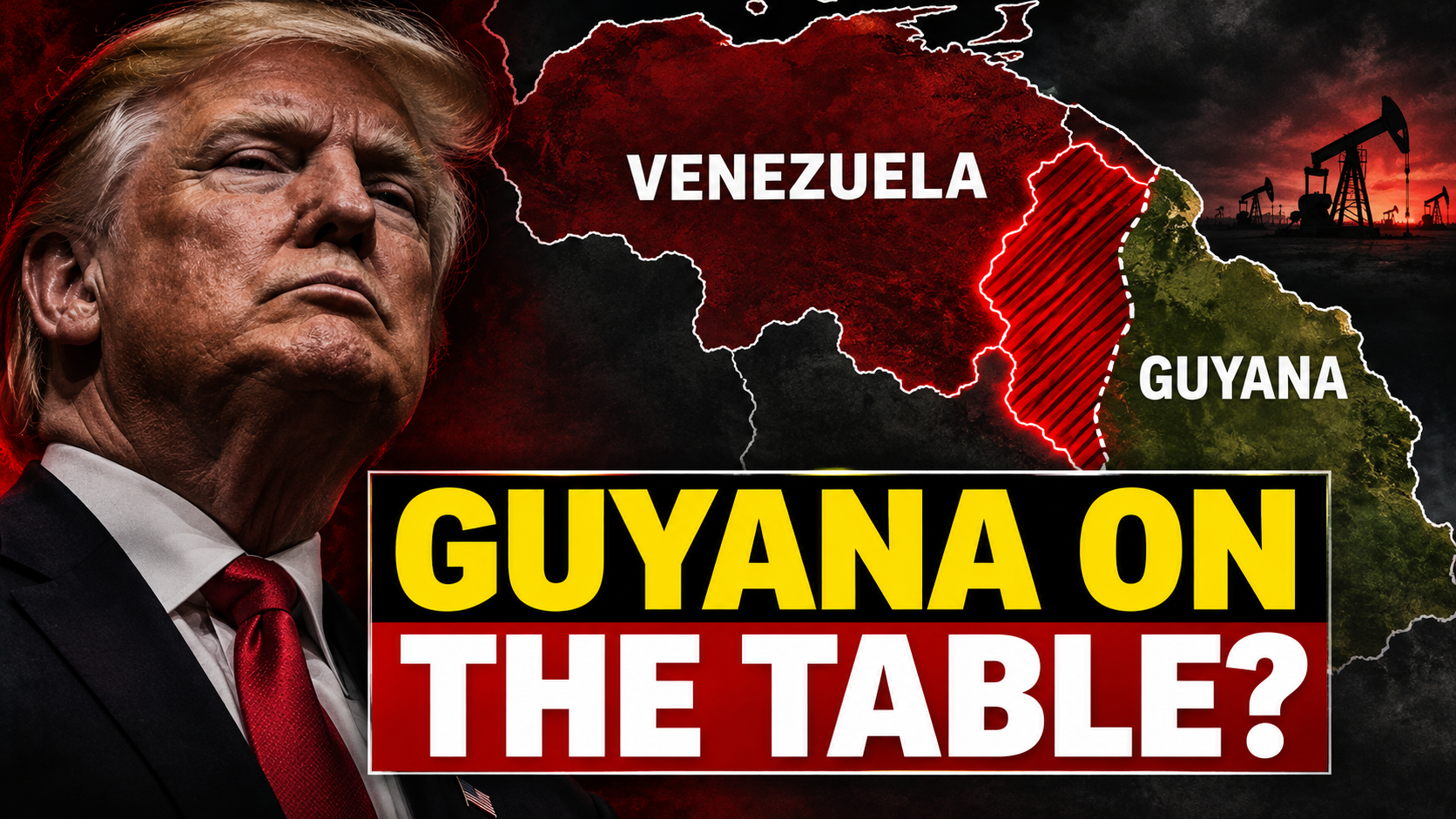
Washington’s diplomatic maneuvering over the oil-rich Essequibo region raises explosive questions about sovereignty, American influence, and who gets to decide the future of another country’s land.
A Territorial Bombshell From Washington
Imagine discovering that officials from a powerful foreign government had been discussing whether part of your country should be handed to your neighbor.
No public referendum. No agreement from your government. Just diplomatic conversations behind closed doors about territory that isn’t theirs to surrender.
That is the disturbing picture emerging from an exclusive Reuters investigation published November 19, 2026.
According to three people familiar with the matter, a senior Trump administration official raised the possibility of Venezuela gaining control over part of Guyana’s Essequibo region — an enormous, resource-rich territory comprising roughly two-thirds of Guyana.
The reported suggestion stunned Guyanese officials and forced Washington to clarify that its official position on the border had not changed. Reuters+1
🔴 Help keep this independent voice alive and uncensored.
Support independent journalism and help keep Real Raw News going.
👉 Support Chris Wick on GoFundMe
The Man Behind the Conversations
At the centre of the controversy is Jeremy Lewin, the former director of policy planning at the U.S. State Department.
During a September meeting in Washington, Lewin reportedly told Guyanese Foreign Secretary Robert Persaud that he could help facilitate territorial discussions with Venezuela’s acting president, Delcy Rodríguez.
Two sources told Reuters that Lewin went further, raising the possibility of Venezuela obtaining partial control of Essequibo.
Lewin acknowledged holding preliminary discussions with both governments. He said the conversations were authorized and directed by the White House.
But there is an important distinction: Reuters’ sources differed on his precise wording, and the reporting does not establish that President Donald Trump personally approved transferring Guyanese territory.
That distinction matters. So does the fact that a senior American official was reportedly entertaining a proposal with such extraordinary consequences.
Follow the Oil, Follow the Power
Essequibo is no ordinary patch of disputed wilderness.
The region contains significant deposits of gold, diamonds and bauxite. Its surrounding offshore waters have also become central to Guyana’s rapidly expanding petroleum industry.
Since ExxonMobil’s major offshore discoveries in 2015, Guyana has emerged as an increasingly important energy producer.
And suddenly, the territorial dispute carries implications far beyond historical maps.
According to Reuters, Lewin also discussed the possibility of American companies conducting business in Essequibo during a July meeting with Rodríguez.
That does not prove a secret oil-for-territory arrangement. But it raises a legitimate question: Were American commercial interests influencing the diplomatic conversations surrounding Guyana’s sovereignty?
When territory, energy resources and geopolitical power collide, the public deserves more than vague assurances that everything is under control.
A New Washington-Caracas Relationship
The revelations arrive during a dramatic transformation in relations between Washington and Venezuela.
Following the U.S. operation that captured former Venezuelan president Nicolás Maduro in January 2026, the Trump administration has developed closer ties with Rodríguez’s government.
On November 18, U.S. Defense Secretary Pete Hegseth visited Caracas and announced an expanded military cooperation agreement involving intelligence sharing, training and counter-narcotics operations.
The rapid change is remarkable.
A government once treated as a major regional adversary is now becoming an American security partner. Reuters+1
Meanwhile, Guyana — itself a longstanding American partner — has been left seeking reassurance about its own borders.
Washington insists its recognition of the existing Guyana-Venezuela boundary remains unchanged.
But the episode demonstrates how quickly smaller countries can find themselves caught between the competing interests of powerful governments.
Guyana’s Territory Is Not Washington’s Bargaining Chip
Venezuela’s claim to Essequibo stretches back more than 180 years.
Guyana maintains that the boundary established through an 1899 arbitration remains valid. Venezuela disputes that position, and the controversy is before the International Court of Justice.
Guyana brought the case to the court in 2018, seeking legal confirmation of its territorial boundary.
The underlying dispute is therefore neither new nor invented by the Trump administration.
What is new is the reported willingness of an American official to explore arrangements involving possible Venezuelan control of territory administered by Guyana.
Guyana has repeatedly maintained that its sovereignty over Essequibo is not negotiable.
That position deserves to be taken seriously, regardless of Washington’s changing diplomatic priorities.
Dark Final Thoughts
Here’s the question nobody in Washington should be allowed to dodge:
Who gave an American official the authority to entertain the surrender of another nation’s territory?
Diplomacy is one thing. Exploring the possible redistribution of someone else’s homeland is something entirely different.
The evidence does not establish that a territorial transfer was formally proposed or approved. But the reported conversations are serious enough to demand an explanation of who authorized them, what was discussed, and whether commercial interests played any role.
Because if sovereignty becomes something powerful governments can quietly negotiate over the heads of smaller nations, international law starts looking less like a principle and more like an inconvenience.
And Guyana has every reason to demand answers.
Sources
- Reuters — Exclusive investigation, November 19, 2026
- Associated Press — Background on Essequibo territorial dispute
About the Author