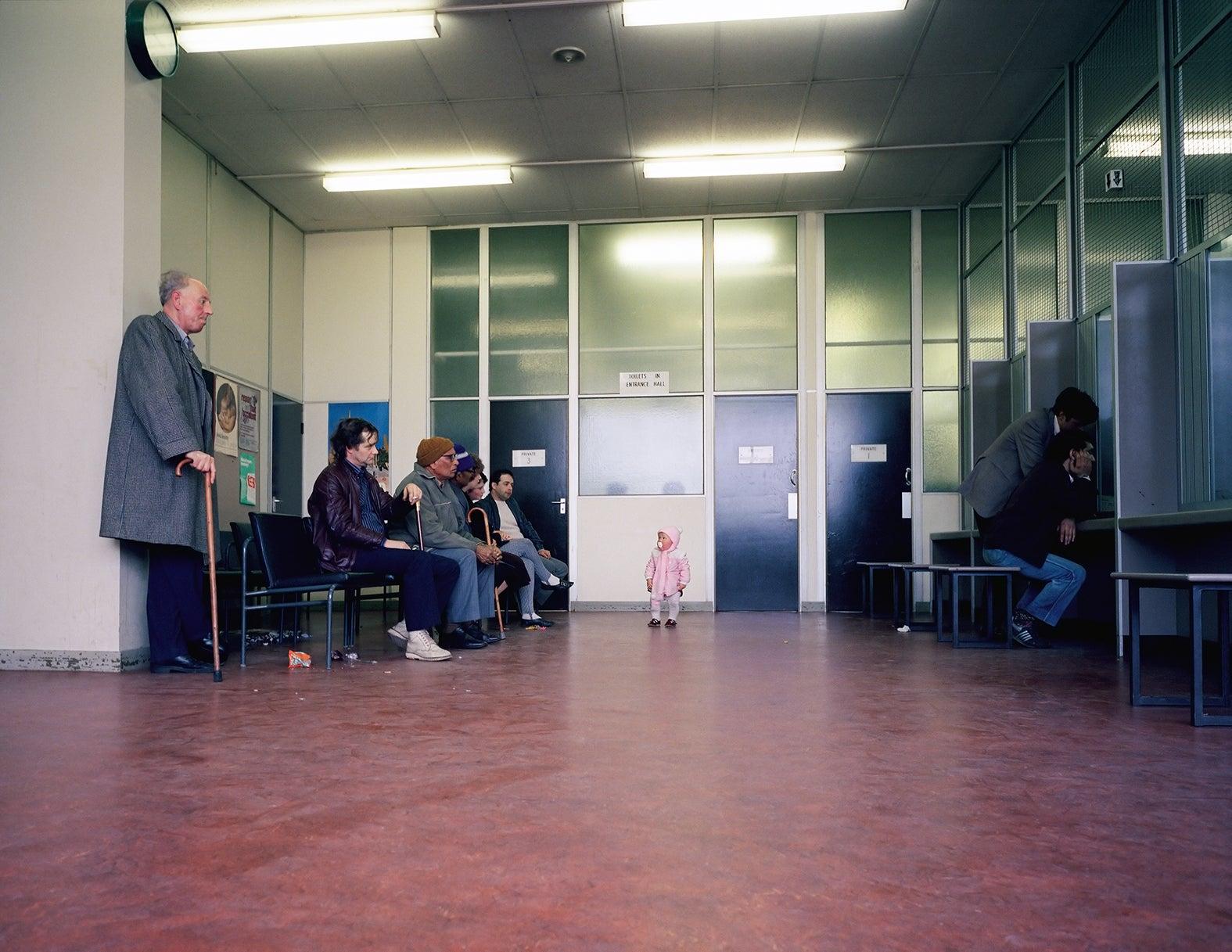
Britain is facing a generational crisis that politicians can no longer bury beneath speeches, promises and political excuses. Nearly one million young people are now outside employment, education and training. Behind those numbers are young lives being stalled, opportunities disappearing and a growing question about whether the institutions running the country have any idea how to fix what they helped create.
The warning is becoming impossible to ignore.
Young people across Britain are finding themselves trapped between an increasingly difficult job market, inadequate support systems and an education system that too often fails to prepare them for what comes next. They are being told to build careers, become independent and contribute to society while the traditional pathways into adulthood continue to narrow.
This is not simply an unemployment problem. It is a warning about the future of an entire generation.
A GENERATION FALLING THROUGH THE CRACKS
The latest government-backed review, led by former Labour minister Alan Milburn, examines the growing number of young people classified as NEET — not in education, employment or training.
The scale is staggering. Britain has approximately 981,000 young people in this position.
🔴 Help keep this independent voice alive and uncensored.
Support independent journalism and help keep Real Raw News going.
👉 Support Chris Wick on GoFundMe
Milburn’s review argues that the problem cannot simply be blamed on young people lacking ambition or refusing to work. Structural problems involving education, healthcare, welfare and the labour market have combined to create barriers that many young people struggle to overcome.
And the employment market itself is changing.
Entry-level opportunities are becoming harder to secure. Applicants can submit dozens of applications without receiving meaningful responses. Automated recruitment systems and increasingly demanding hiring processes are creating another obstacle for inexperienced jobseekers trying to get their first break.
For someone attempting to enter the workforce, rejection after rejection can become more than a financial problem. It can destroy confidence, undermine independence and make the prospect of a career seem increasingly distant.
THE GOVERNMENT’S PROPOSED RESET COMES WITH A WARNING
Milburn’s newly published report, From a Welfare State to a Working State, calls for a fundamental overhaul of how Britain supports young people.
Among its recommendations are a Youth Opportunity Service, expanded apprenticeships, financial incentives for employers hiring young people and a guaranteed employment opportunity for those who remain outside work for an extended period.
But there is a more controversial side.
The proposals also include restructuring certain youth welfare entitlements and introducing new benefit arrangements. Critics will inevitably question whether restricting financial support can genuinely help people whose difficulties may involve disability, mental health or circumstances beyond their control.
The proposed reforms require substantial investment, beginning with £500 million in 2027–28 and potentially reaching £5.8 billion annually by 2036–37.
These are not minor adjustments. They represent a major attempt to reshape the relationship between young people, employment and the state.
WHO ANSWERS FOR A GENERATION LEFT BEHIND?
There is a fundamental question that should be confronting every politician in Westminster.
How did a country with enormous economic resources reach a point where nearly one million young people are not working, studying or receiving training?
And why did it take a crisis of this magnitude to force a serious examination of the systems supposedly designed to give them opportunities?
Young people cannot manufacture jobs that do not exist. They cannot independently repair broken support systems or overcome every barrier created by an increasingly unforgiving labour market.
Expecting them to carry the entire responsibility for this failure is an easy political escape route.
The government now has a report, a collection of recommendations and a proposed financial commitment. What it does not yet have is proof that these promises will translate into lasting change.
A generation’s future should not depend on another round of Westminster promises.
If Britain cannot provide its young people with a realistic opportunity to learn, work and build independent lives, the consequences will extend far beyond unemployment statistics.
Lost skills, prolonged dependency, worsening inequality and wasted human potential carry a price that will be paid for decades.
The question is no longer whether Britain has a youth employment crisis.
The question is whether those responsible for governing the country will finally fix it — or whether another generation will be sacrificed while politicians argue over who is to blame.
SOURCES
- BBC News — The young people caught up in Britain’s Neets crisis
https://www.bbc.com/news/articles/cj75pkgrv151o - Reuters — UK puts forward plans to curb youth welfare payments and tackle joblessness
https://www.reuters.com/world/uk/uk-needs-complete-system-reset-tackle-youth-joblessness-government-report-says-2026-11-16/ - Sky News — Milburn report aiming to tackle the NEET crisis
https://news.sky.com/story/politics-latest-uk-should-avoid-knee-jerk-response-to-trump-tariffs-on-steel-minister-says-12593360 - The Guardian — NEET ideas: What’s in Alan Milburn’s report?
https://www.theguardian.com/society/2026/nov/17/neet-alan-milburn-report-young-people-not-in-education-employment-or-training
About the Author