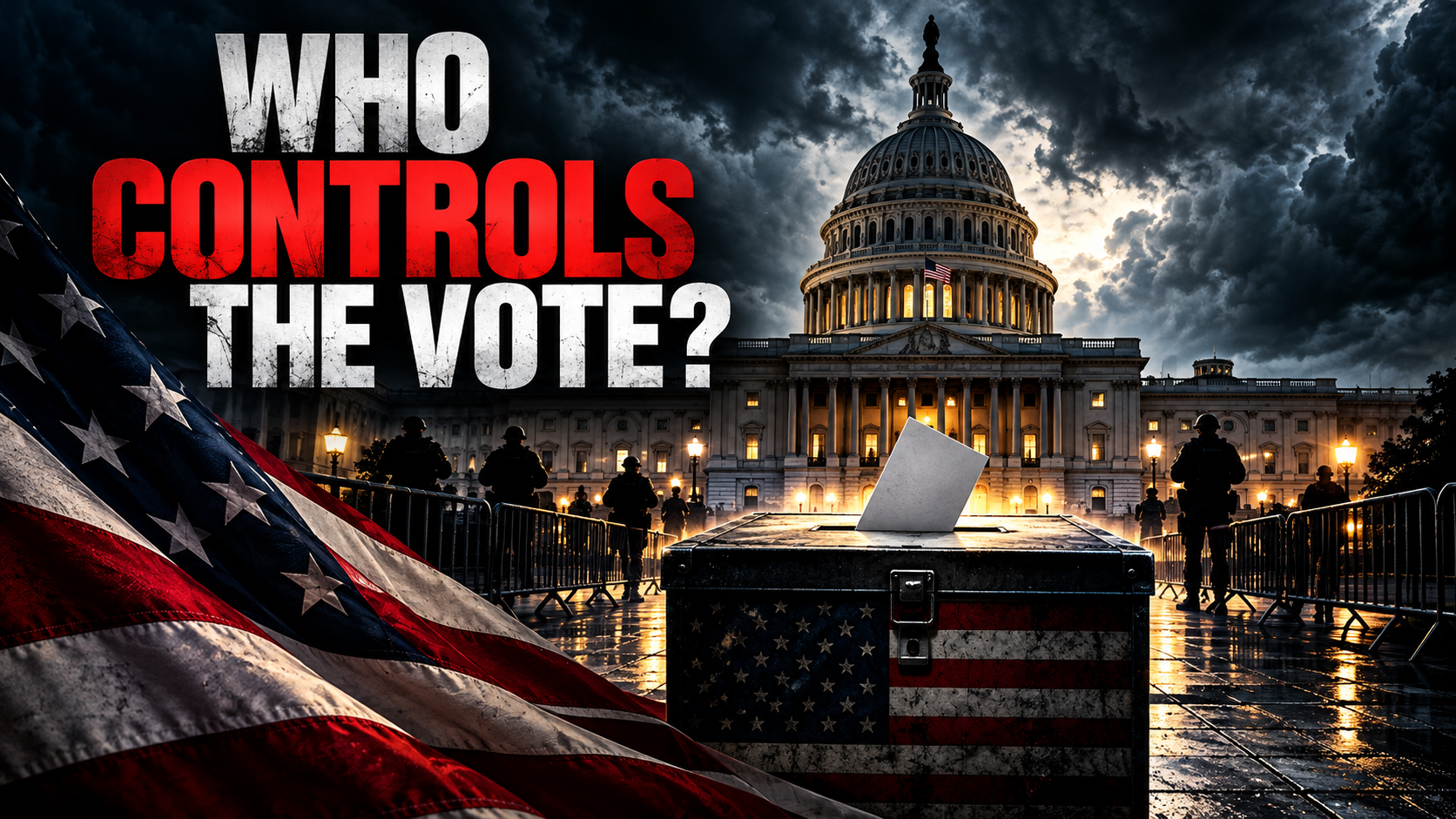
More than $220 million has already flowed through U.S. congressional election betting markets. As Americans prepare to vote in November, a disturbing question emerges: Are elections becoming another financial playground for those with the deepest pockets?
Democracy Is Now Open for Business
There was a time when American elections were supposed to be about voters choosing their representatives. Citizens debated policies, challenged candidates, and ultimately cast ballots that determined the country’s political future.
Now, a growing financial industry has found another way to make money from that process.
Bet on the outcome. Bet on the margin. Bet on the political future of the United States.
According to an October 14 Reuters investigation, trading activity tied to the 2026 U.S. congressional midterm elections has already exceeded $220 million, compared with approximately $92 million during the entire 2024 congressional election cycle.
These figures come from research by the Anti-Corruption Data Collective, which examined election-related markets operating through prediction platforms including Polymarket and Kalshi.
🔴 Help keep this independent voice alive and uncensored.
Support independent journalism and help keep Real Raw News going.
👉 Support Chris Wick on GoFundMe
That is not merely an interesting development in financial technology.
It raises a much larger question about what happens when political power becomes a commodity that people can trade.
And perhaps the most uncomfortable question of all is this:
When people can make enormous sums of money predicting political outcomes, how long before some begin looking for ways to influence those outcomes?
There is no evidence that the reported trading surge itself represents election manipulation. But the incentives deserve scrutiny.
The Numbers Tell a Story Washington Cannot Ignore
The explosion in political prediction markets is difficult to dismiss.
2024 congressional cycle
$92M
Reported trading volume
2026 cycle through Sept. 30
$220M+
Reported trading volume
Congressional election betting volume
Reported trading volume in USD millions, based on ACDC data cited by Reuters. The 2026 figure is a minimum and the cycle is incomplete.
$0$60M$120M$180M$240M2024 full cycle2026 to Sept. 30
Source: Anti-Corruption Data Collective, as reported by Reuters, October 14, 2026. Figures represent trading volume, not profits or unique cash deposits.
Researchers examined more than 21,000 congressional election markets for the 2026 cycle, compared with 463 markets connected to congressional races in 2024.
The nature of the bets is changing as well.
In 2024, approximately 71% of the markets studied focused on which candidate would win. In 2026, only 16% focused on outright winners, while 58% concerned the margin of victory.
Think about what that means.
The business is expanding beyond predicting who wins an election. It is creating increasingly detailed financial contracts tied to the democratic process itself.
How many votes will separate the candidates? How large will the victory be? What will turnout look like?
Every political development potentially becomes another opportunity for speculation.
The election is no longer simply a contest for public office.
For some participants, it is a trading opportunity.
The One Percent Problem: Who Controls the Money?
One of the most revealing findings concerns the concentration of trading activity.
According to the research cited by Reuters, the top 1% of Polymarket international wallets, ranked by congressional market trading volume, accounted for approximately 70% of that volume.
One percent of wallets. Seventy percent of trading volume.
That does not prove wrongdoing, coordinated activity, or that one percent of individual people control the market. A wallet is not necessarily a unique person, and trading volume does not equal ownership.
Nevertheless, it exposes a striking imbalance.
These markets are promoted as tools for discovering what the public collectively believes. But when a small fraction of accounts generates most of the trading activity, how representative is the resulting market price?
A prediction market may incorporate information that traditional polling misses. Yet it also reflects the capital, risk appetite, and trading strategies of its participants.
Those are not the same things as public opinion.
And if financial commentators begin presenting market prices as the authoritative measure of political reality, the distinction becomes increasingly important.
Insider Trading: The Question Nobody Can Afford to Ignore
There is another problem lurking beneath the excitement surrounding election betting.
Insider information.
Political campaigns operate through networks of advisers, pollsters, strategists, donors, consultants, and campaign employees.
Many of these individuals possess information unavailable to ordinary voters.
They may know about internal polling, planned campaign announcements, fundraising problems, or strategic decisions before the public does.
Now imagine what happens when that information has direct financial value in an election prediction market.
The potential conflict is obvious.
Reuters reported that Kalshi has suspended several candidates for betting on their own races. It also referenced earlier NPR reporting that campaign staffers had wagered on elections involving campaigns where they worked.
Kalshi says it prohibits politicians and campaign workers from trading election contracts, while platforms maintain that they have surveillance and misconduct-detection systems.
Those safeguards matter.
But they also demonstrate why the underlying concern is legitimate.
If people close to political campaigns can potentially profit from information unavailable to voters, who is ensuring the rules are enforced?
This is not an accusation that all prediction-market participants are corrupt.
It is a demand for meaningful transparency in an industry where financial incentives and political influence can intersect.
Can Betting Markets Influence the Elections They Predict?
Prediction-market operators argue that financial incentives help produce accurate forecasts.
There is a reasonable argument behind that claim.
When traders risk their own money, they have an incentive to seek reliable information rather than simply express political loyalty.
But financial incentives do not automatically eliminate misinformation, manipulation, or conflicts of interest.
Consider a hypothetical scenario.
A heavily traded prediction market suddenly shifts against a political candidate. News organizations report that shift. Political commentators interpret the movement as evidence that the candidate is losing momentum.
Voters see the headlines.
Donors reconsider their support.
Campaign strategists respond.
The market movement becomes part of the political conversation.
None of this establishes that the original trading activity was manipulated. Nor does it prove that prediction-market prices change election results.
However, it illustrates an important possibility: a market designed to predict political behavior could also become information that influences political behavior.
That feedback loop deserves serious examination.
Because the moment a financial prediction begins affecting the event it is supposed to predict, the distinction between observation and influence becomes harder to maintain.
Texas, Maine, Michigan: Political Battlegrounds or Financial Opportunities?
According to the Reuters investigation, much of the election-betting volume is concentrated in a relatively small number of congressional contests.
The Texas Senate race, involving Democrat James Talarico and Republican Ken Paxton, has attracted particularly significant attention.
Senate contests in Maine, Michigan, and South Carolina have also drawn substantial betting activity.
There is nothing inherently suspicious about traders concentrating on closely watched races.
High-profile elections naturally attract attention, speculation, and disagreement.
But this concentration raises questions about market structure.
What happens when a handful of politically significant races attract a disproportionate amount of speculative capital?
How effectively can platforms identify suspicious transactions?
And how transparent are they about the identities and affiliations of participants who may possess political connections?
These questions should not be dismissed simply because prediction markets are innovative.
Innovation is not a substitute for accountability.
Americans Are Being Asked to Trust Another System
The American political system already struggles with public distrust.
Citizens question political donations, lobbying, media coverage, election administration, and the influence of wealthy interests.
Now another industry is asking Americans to accept that financial markets can provide useful information about the elections that determine their government.
Reuters reported that a recent Reuters/Ipsos survey found most Americans opposed using prediction markets to wager on elections.
That opposition deserves attention.
Supporters may see prediction markets as instruments of transparency and collective intelligence.
Critics may see them as another opportunity for powerful financial interests to profit from political uncertainty.
Both arguments require evidence.
But one thing should be clear: the public has a legitimate interest in knowing how these markets operate, who participates, and whether regulators have adequate tools to prevent misconduct.
Election integrity should not become an afterthought in the rush to develop another profitable financial product.
The Real Question Is Not Whether the Markets Are Accurate
Prediction platforms frequently emphasize their forecasting performance.
Polymarket told Reuters that its election markets achieved a 98% accuracy rate one day before elections.
That is a company-reported figure, not an independently established measure of every market’s performance. Accuracy also depends on how forecasts are selected, measured, and evaluated.
But even if prediction markets become extraordinarily accurate, accuracy alone cannot answer the most important questions.
A system can predict an outcome accurately while still creating conflicts of interest.
It can provide useful information while remaining vulnerable to misconduct.
It can be innovative, profitable, and popular among traders without necessarily serving the broader public interest.
The debate should therefore extend beyond whether market prices are better than opinion polls.
It should examine whether political prediction markets strengthen democratic transparency or introduce new vulnerabilities into an already contentious electoral environment.
Democracy Should Not Become Just Another Casino
America’s November 2026 midterm elections will determine the direction of Congress and shape the balance of political power in Washington.
Millions of Americans will vote based on their priorities, economic concerns, political beliefs, and expectations for the country’s future.
Meanwhile, traders will be placing financial positions on many of those same outcomes.
The existence of those markets does not mean American democracy is for sale.
But it does mean democracy has become an increasingly valuable subject of financial speculation.
And that reality should make Americans ask some difficult questions.
Who is trading? What information do they possess? Who investigates suspicious activity? What protections exist against conflicts of interest? And how much influence should financial markets have over the public narrative surrounding an election?
The industry may have reasonable answers.
If so, those answers deserve public scrutiny rather than blind acceptance.
Because an election should ultimately belong to the voters, not to the traders who profit from predicting their decisions.
And when more than $220 million is already changing hands around congressional election outcomes, the question is no longer whether political betting has become a serious business.
It has.
The question is whether American democracy is prepared for the consequences.
Sources
Reuters — Inside the booming market for US midterm election bets (October 14, 2026)
https://www.reuters.com/legal/government/inside-booming-market-us-midterm-election-bets-2026-10-14
Anti-Corruption Data Collective — Research organization examining political corruption and financial transparency
Kalshi — Prediction market operator
Polymarket — Prediction market operator
Editor’s note: This article is original political commentary based primarily on Reuters reporting and the research it describes. Questions and hypothetical scenarios are presented as analysis, not as established evidence of election manipulation or misconduct by any particular trader.
About the Author