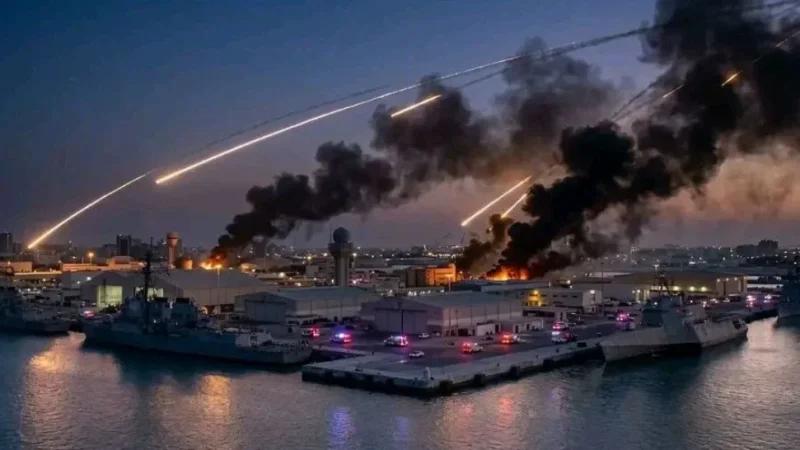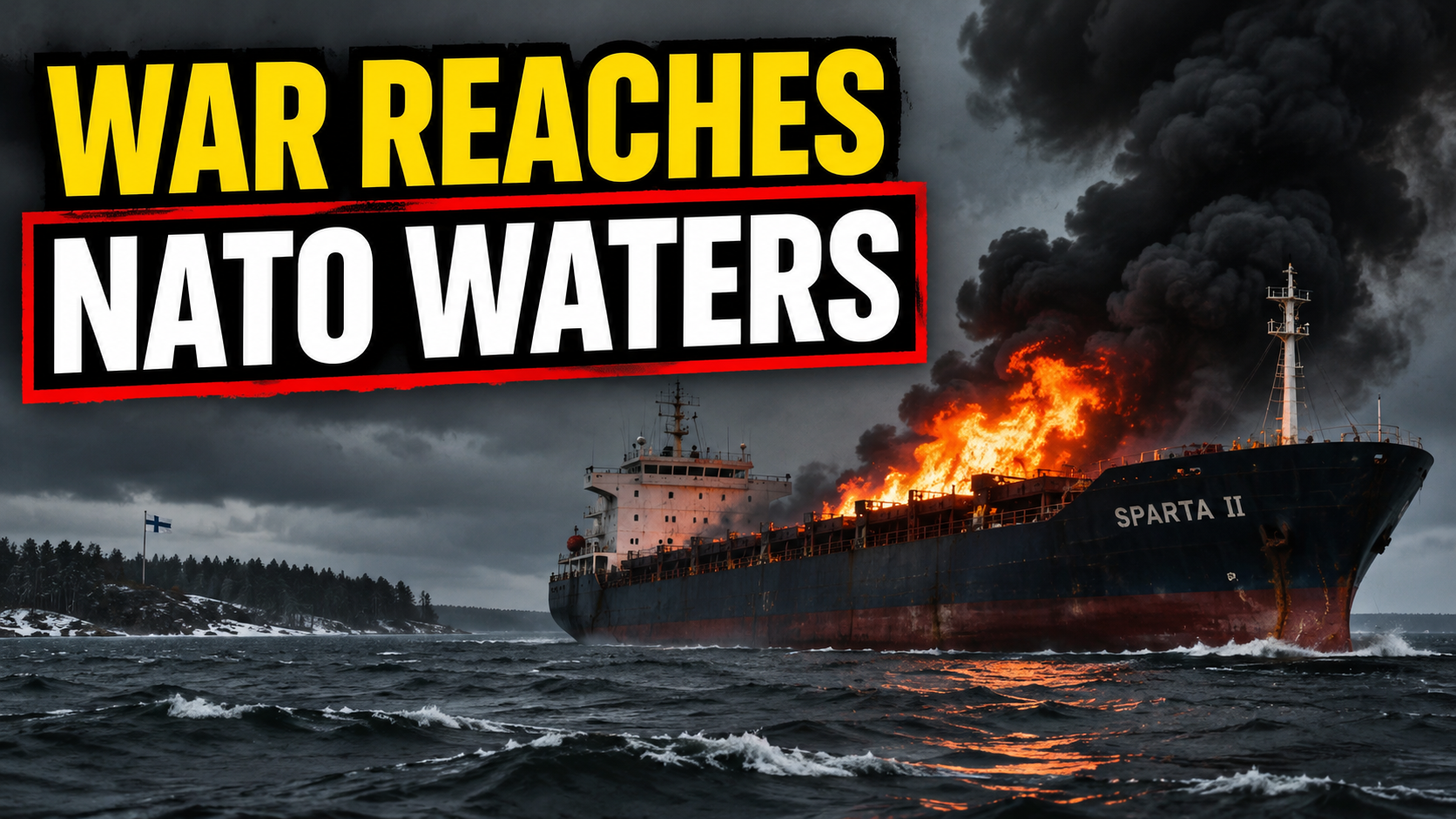
An apparent drone strike in the Gulf of Finland has left a Russian cargo vessel burning inside Finnish territorial waters, raising dangerous questions about how far the Ukraine conflict could spread into NATO’s backyard.
A Burning Ship on NATO’s Doorstep
The war between Russia and Ukraine has delivered another disturbing reminder that the battlefield no longer respects the boundaries politicians draw on maps.
On Saturday, November 21, a Russian cargo vessel travelling toward Kaliningrad reportedly came under attack by two drones in the Gulf of Finland. The ship caught fire and subsequently drifted into Finnish territorial waters, triggering an emergency response from authorities.
The vessel, identified by Estonian public broadcaster ERR as the Sparta II, was reportedly struck approximately three nautical miles from Russia’s maritime border.
Leningrad regional Governor Alexander Drozdenko said the crew was being evacuated while authorities assessed the damage.
Finland confirmed that the damaged vessel was burning in its waters and that rescue preparations were underway.
🔴 Help keep this independent voice alive and uncensored.
Support independent journalism and help keep Real Raw News going.
👉 Support Chris Wick on GoFundMe
And just like that, a war supposedly contained within Ukraine’s borders delivered another emergency to the doorstep of a NATO member.
Two Drones, One Burning Ship, and Unanswered Questions
Russian authorities say two unmanned aerial vehicles attacked the cargo vessel while it was travelling through international waters.
But several critical questions remain unanswered.
Who launched the drones? What exactly was the intended target? And was the attack designed to disrupt Russian military logistics, commercial shipping, or both?
No independently verified identification of the drone operators was available in the initial reporting.
The distinction matters.
Ukraine has repeatedly targeted Russian military infrastructure as part of its resistance to Moscow’s invasion. However, an attack on a vessel in an international shipping corridor raises additional questions about maritime security and the possibility of unintended escalation.
Ukrainian military intelligence has previously identified the Sparta II as a vessel involved in transporting military equipment. The ship also appears on the United States sanctions list.
That background makes the vessel strategically significant, but it does not independently establish who carried out Saturday’s attack.
Finland Responds as the Baltic Becomes More Dangerous
Finland’s Border Guard reported that the vessel had drifted northward into Finnish territorial waters.
Authorities began coordinating possible rescue operations and preparations for an environmental emergency.
Estonian authorities also monitored the incident, with their maritime rescue coordination centre receiving reports of a fire and possible explosions aboard the vessel.
No marine pollution had been reported in the available initial updates.
Meanwhile, Finland temporarily restricted maritime and air traffic in parts of the Gulf of Finland amid wider concerns about drone activity.
The incident comes as Russia reports extensive drone attacks against its Leningrad region. Drozdenko claimed Russian air defences had intercepted 80 drones before officials lifted a regional threat warning.
That interception figure remains a Russian government claim.
Kaliningrad: The Strategic Pressure Point
The ship’s reported destination adds another dangerous dimension.
Kaliningrad is a Russian territory separated from mainland Russia, positioned between NATO members Poland and Lithuania.
It houses significant Russian military infrastructure and remains strategically important to Moscow’s Baltic operations.
Kaliningrad Governor Alexei Besprozvannykh insisted the incident would not threaten supplies to the region.
But the broader implications cannot be dismissed so easily.
The Baltic Sea is a vital commercial and military corridor where Russian vessels, NATO forces, civilian shipping, and increasingly sophisticated unmanned weapons operate in close proximity.
A burning cargo ship is not automatically the beginning of a wider war.
It is, however, another example of how quickly military operations can create emergencies beyond the territory where the fighting began.
Dark Final Thoughts: The War Is Getting Closer
There is something deeply unsettling about watching a commercial shipping corridor become another arena for drone warfare.
A vessel is reportedly attacked. Flames spread. A crew faces evacuation. Another country’s emergency services are suddenly drawn into a conflict they did not start.
And the public is left trying to separate confirmed facts from competing wartime narratives.
Russia’s invasion created the conditions for this expanding conflict. Ukraine has the right to defend itself. Neither fact eliminates the danger of escalation.
The question now is not whether the Baltic Sea is strategically important.
It always has been.
The question is how many more incidents can occur near NATO territory before one produces consequences nobody intended.
Because once missiles and drones begin crossing the boundaries between battlefields and international shipping routes, the margin for error becomes frighteningly small.
And history has never been particularly forgiving when powerful governments miscalculate.
Sources
- Reuters — Russia Says Cargo Vessel Struck by Drones, Finland Reports Fire — November 21, 2026.
- ERR News — Russian Cargo Ship on Fire in Gulf of Finland — November 21, 2026.
About the Author