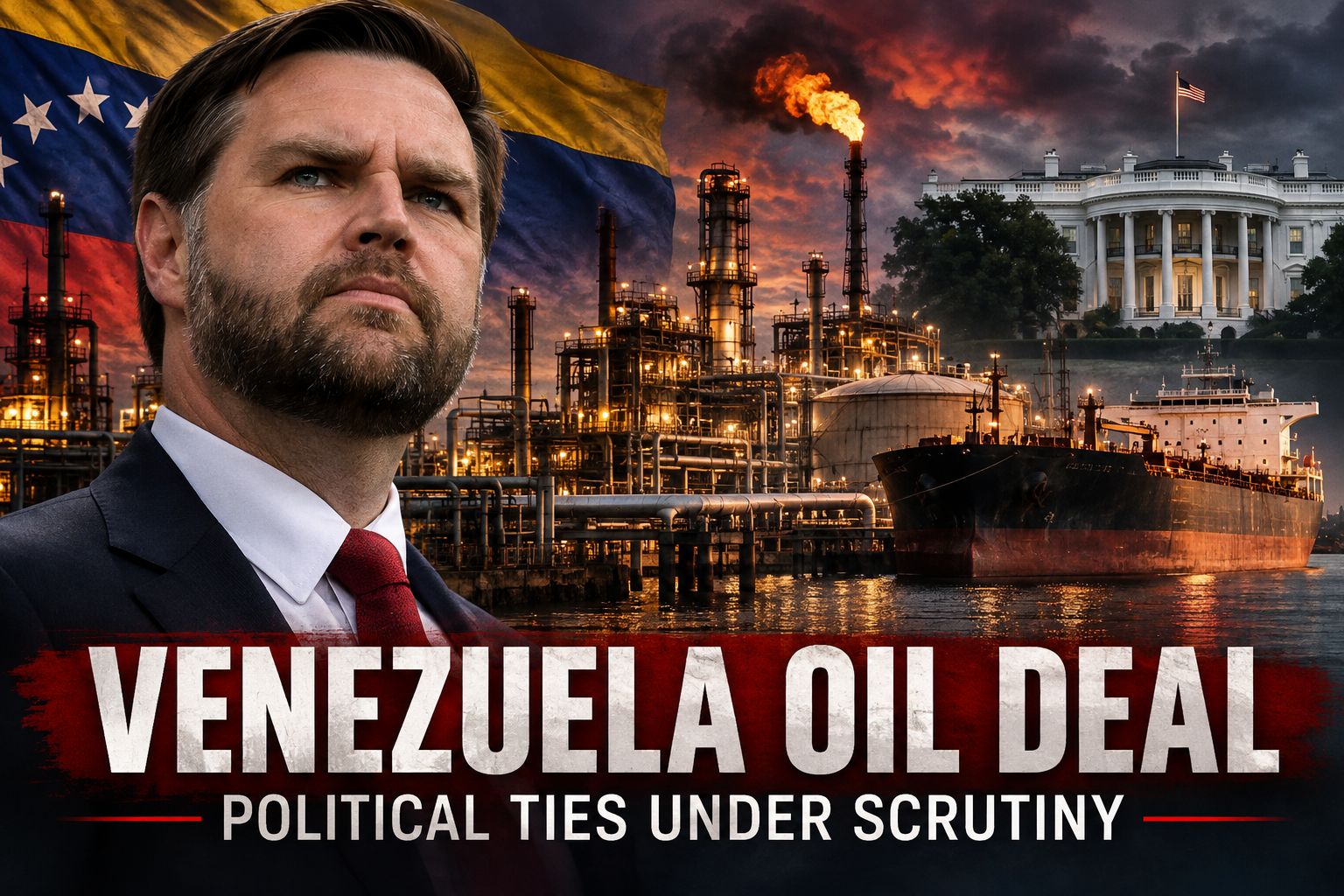
A Reuters investigation raises questions about political connections and the awarding of lucrative Venezuelan oil contracts.
A politically connected oil trader, a private luxury resort, and a lucrative government-backed contract. A new Reuters investigation raises uncomfortable questions about who benefited from America’s intervention in Venezuela.
Washington’s Venezuela operation was presented as a matter of national security and political transition. But behind the military intervention, another story was unfolding — one involving wealthy political donors, powerful government officials, and access to one of the world’s most valuable oil reserves.
A November 11 Reuters investigation has exposed how John Addison, a senior trader at energy giant Vitol and an early financial supporter of Vice President JD Vance, became instrumental in securing a prized Venezuelan oil marketing arrangement.
The central question is no longer simply who controls Venezuela’s oil.
It’s who gets paid to sell it.
A Luxury Resort, a Vice President and an Oil Trader
On December 27, 2025, Vance traveled to Montana’s exclusive Yellowstone Club, where Reuters reports he met Addison, citing a person familiar with the matter.
🔴 Help keep this independent voice alive and uncensored.
Support independent journalism and help keep Real Raw News going.
👉 Support Chris Wick on GoFundMe
Flight records placed their aircraft at the same airport that day.
According to Reuters’ source, the two discussed how quickly Venezuelan crude could reach international markets if Washington gained control of the country’s oil supplies.
Both Vance’s office and Addison deny that the reported meeting occurred. The flight records establish the aircraft’s presence, not the alleged conversation.
Just days later, on January 3, American forces captured Venezuelan President Nicolás Maduro.
On January 5, Energy Secretary Chris Wright called Addison about Vitol potentially marketing Venezuelan oil.
That call is confirmed.
Within days, Vitol and rival Trafigura had secured special licenses to sell Venezuelan crude without a competitive bidding process.
Political Donations and Access to Power
Addison was no ordinary industry contact.
Federal Election Commission records reviewed by Reuters show he contributed $300,000 in 2022 to a political action committee supporting Vance’s Senate campaign.
In 2024, Addison and his wife contributed another $7 million to political committees, including $5 million to a pro-Trump organization.
Reuters also reported that Vance had previously described Addison as trustworthy to Wright, something a US official independently confirmed.
The Energy Department insists Vance and Wright never discussed Venezuelan oil sales and says Vitol was chosen because of its enormous international trading capabilities.
That explanation deserves consideration.
But so does the uncomfortable reality that a politically connected donor received a direct call from the energy secretary before his company secured extraordinarily valuable commercial access.
Political connections alone do not establish corruption. They do, however, make transparency essential.
Hundreds of Millions at Stake
Venezuela possesses the world’s largest proven crude oil reserves.
According to Reuters, energy finance expert Tom Seng estimated that traders could earn approximately $3 to $3.50 per barrel on Venezuelan oil sales.
With Venezuelan exports exceeding 200 million barrels this year, the potential profits are enormous, although individual company earnings remain unverified.
Democratic lawmakers have demanded answers about the licensing decisions and whether either company received advance knowledge of the military operation.
Both Vitol and Trafigura deny receiving such advance warning.
No evidence presented in the Reuters investigation establishes that Vance, Addison or the companies illegally influenced the military operation.
From Oil Trader to Government Adviser
One final development makes this arrangement particularly difficult to ignore.
Addison retired from Vitol in March and subsequently became chairman of Wright’s energy policy advisory board.
A politically influential donor helped connect an energy trading company with a lucrative government opportunity and later assumed an advisory position within the same administration.
That sequence is documented. Whether improper favoritism occurred remains unresolved.
Americans deserve to know why competitive bidding was bypassed, how the companies were selected, and whether political relationships influenced decisions involving billions of dollars in national resources.
Because when military power, political donations and private oil profits intersect, public scrutiny isn’t optional.
It’s the bare minimum.
Sources
- Reuters — November 11, 2026: How a Vitol Trader’s Ties to JD Vance Helped Land a Prized Venezuela Oil Contract
About the Author

Washington blacklisted a Chinese university with ties to the People’s Liberation Army.
So how the hell did it end up buying $123,000 worth of Nvidia’s powerful H200 AI chips?
And that’s not all. Procurement records show it also rented access to more restricted processors.
We keep hearing about national security, tough sanctions and protecting American technology. Meanwhile, the restrictions appear to have some pretty serious holes.
What good is a blacklist if it can’t keep the technology out?
https://chriswicknews.com/china-nvidia-h200-chips-us-blacklist/