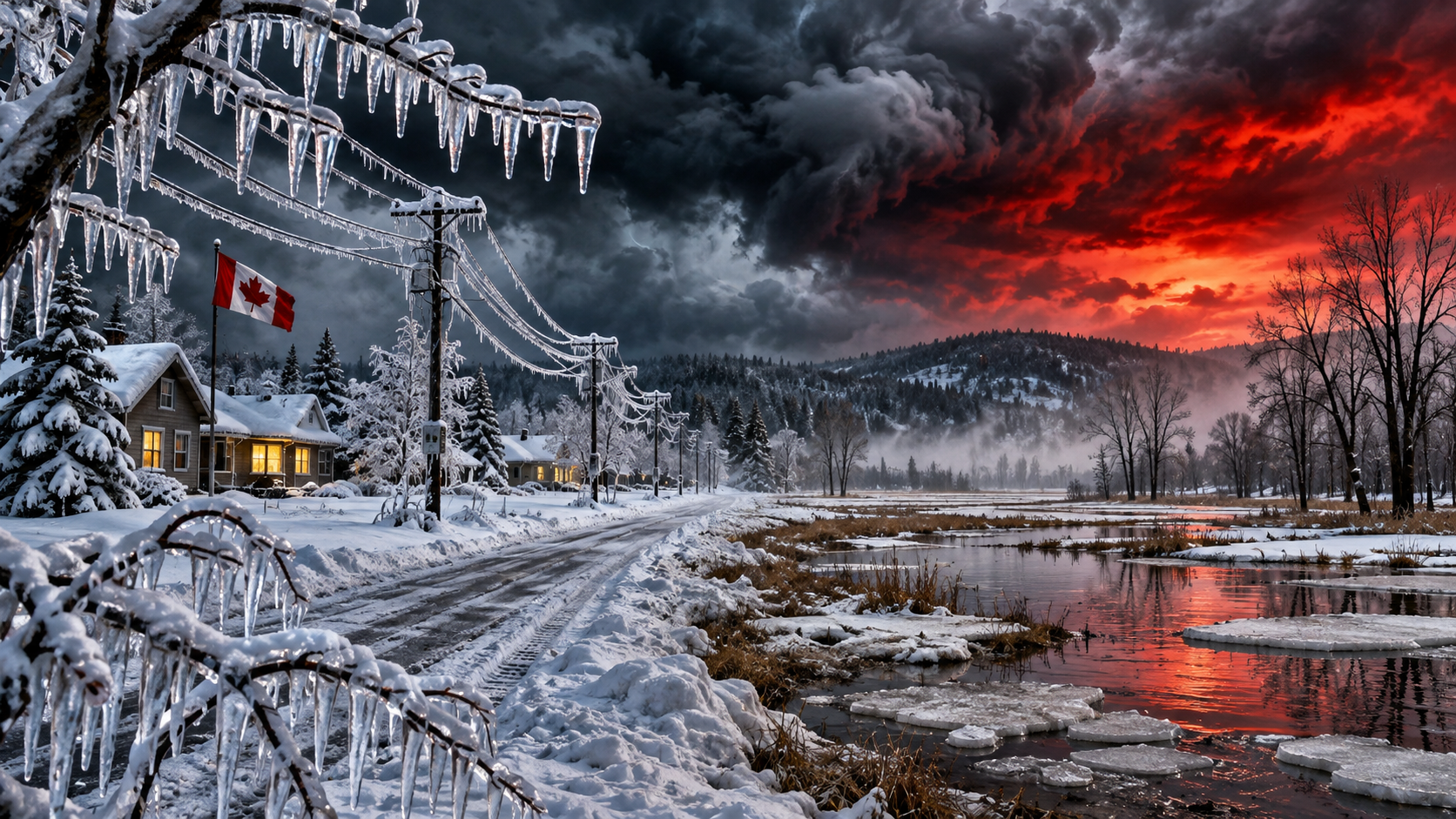
An exceptionally powerful El Niño could disrupt Canada's winter weather patterns and increase environmental and economic risks.
A powerful El Niño could reshape Canada’s winter weather, bringing unusual warmth, unpredictable storms and serious economic consequences. But beneath the headlines lies a bigger question: How prepared is Canada for a future where the seasons no longer behave as expected?
There was a time when Canadians knew what winter meant.
Snow piled up. Lakes froze. Children built snowmen. Farmers counted on the snowpack to replenish their fields. Entire communities built their economies around the cold.
Now, something massive is unfolding in the Pacific Ocean, and Canada could be about to discover just how fragile those familiar winter traditions really are.
A powerful Super El Niño is developing, threatening to disrupt weather patterns across the country during the winter of 2026–2027. And while warmer temperatures might sound like a welcome break from the bitter cold, the consequences could be far more disturbing than a few missing snowflakes.
A Climate Giant Is Waking Up in the Pacific
In a November 5 interview on CBC’s The Current, University of Waterloo climate researcher Chris Fletcher explained how exceptionally warm Pacific Ocean temperatures could influence Canada’s upcoming winter.
🔴 Help keep this independent voice alive and uncensored.
Support independent journalism and help keep Real Raw News going.
👉 Support Chris Wick on GoFundMe
El Niño is a naturally recurring climate phenomenon. When Pacific trade winds weaken, warm ocean water shifts eastward, altering atmospheric circulation and weather patterns thousands of kilometres away.
But this isn’t shaping up to be an ordinary El Niño.
Fletcher described exceptionally high ocean temperatures approaching three degrees Celsius above normal in a key region of the tropical Pacific.
That matters because the strongest influence on Canadian weather typically arrives during winter.
Seasonal forecasts from Environment and Climate Change Canada point toward warmer-than-normal conditions across much of the country, including Ontario, Quebec and Atlantic Canada.
But warmer doesn’t necessarily mean safer.
Canada’s Winter Economy Could Take a Beating
People celebrating a milder winter might want to consider what happens when the snow doesn’t arrive as expected.
Ski resorts depend on reliable snowfall. Snowmobile tourism supports small communities. Northern communities rely on seasonal ice roads to transport essential supplies.
When winter becomes shorter or less predictable, those systems face serious challenges.
And then there’s agriculture.
Snow is more than frozen water sitting on the ground. It acts as a natural reservoir, releasing moisture into the soil during spring. Reduced snowpack can contribute to water shortages, agricultural stress and conditions that increase wildfire risk.
The Canadian Centre for Climate Services has warned that the developing El Niño could increase the risk of drought and wildfires extending into 2027.
Imagine celebrating a mild January only to spend July watching another Canadian community evacuate as flames approach.
That’s the uncomfortable reality behind the warmer-winter headlines.
Remember the 1998 Ice Storm?
Canadians who lived through the devastating ice storm of January 1998 know exactly how dangerous winter weather can become.
Freezing rain brought down power lines, crippled infrastructure and left millions without electricity across eastern Canada.
That disaster occurred during one of the strongest El Niño events of the twentieth century.
History repeating itself isn’t guaranteed. El Niño alone cannot predict another ice storm, and seasonal forecasts cannot tell us precisely when extreme weather will strike.
But it should serve as a warning against complacency.
A winter that averages warmer temperatures can still deliver brutal cold snaps, destructive freezing rain and major snowstorms.
Is Canada Actually Prepared?
This is where the conversation needs to get uncomfortable.
Governments spend enormous amounts of time discussing climate change, announcing strategies and setting ambitious targets.
But how much attention is being paid to the immediate vulnerabilities of ordinary Canadians?
Are electrical grids prepared for destructive ice accumulation? Are northern communities ready for shorter ice-road seasons? Are farmers equipped to handle water shortages? Are emergency services prepared for another devastating wildfire season?
Canadians deserve answers that go beyond another press conference.
El Niño is a natural phenomenon, but it is unfolding against a background of long-term human-caused climate warming. The combination can amplify certain weather risks.
Canada cannot control the Pacific Ocean.
It can, however, control how seriously it prepares for the consequences.
Because when the power goes out, the roads become impassable and entire communities face disaster, nobody gives a damn about another government promise.
Sources
- CBC — The Current: Super El Niño is changing Canadian winters
- Canadian Centre for Climate Services — What the developing exceptional El Niño means for Canada in 2026–27
- Environment and Climate Change Canada — Seasonal forecasts for Canada
About the Author