WASHINGTON — The election dust has barely settled, and already one of Donald Trump’s most controversial Justice Department officials is heading for the exit.
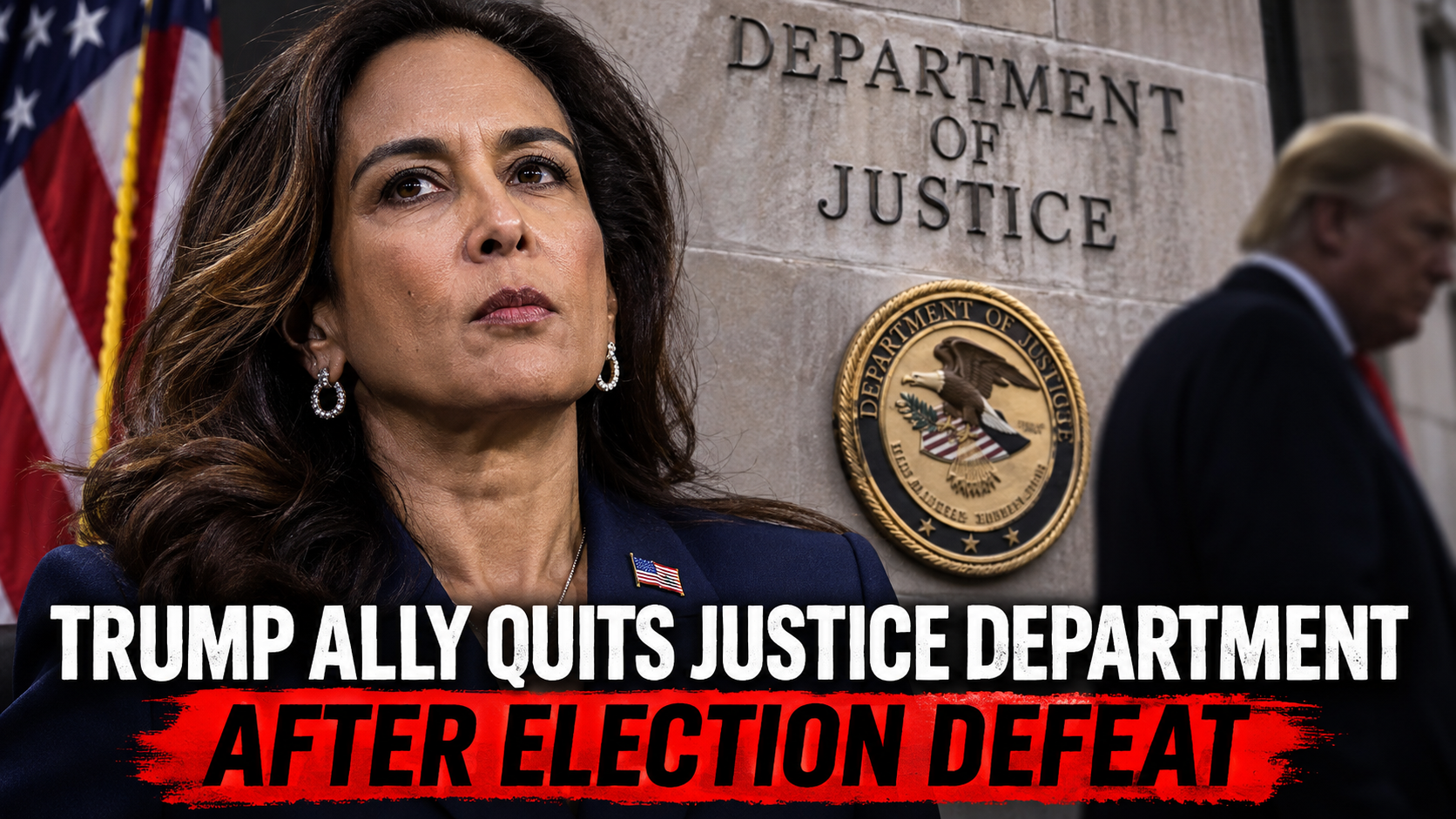
Harmeet Dhillon, the longtime Trump ally who led the Justice Department’s Civil Rights Division, resigned Thursday, November 5, following a devastating midterm election setback for Republicans.
Attorney General Todd Blanche confirmed her departure, praising her 18 months of service.
But behind the official farewell lies a far more uncomfortable story about political loyalty, institutional upheaval and what happens when the machinery of American justice becomes entangled with a president’s ideological agenda.
A Civil Rights Division Turned Upside Down
Dhillon wasn’t just another political appointment.
She took control of one of the Justice Department’s most important divisions and fundamentally changed its priorities.
🔴 Help keep this independent voice alive and uncensored.
Support independent journalism and help keep Real Raw News going.
👉 Support Chris Wick on GoFundMe
Traditionally responsible for enforcing federal protections against discrimination, voting rights violations and police misconduct, the division increasingly concentrated on issues central to Trump’s political movement.
Those included investigations into university diversity programs, allegations of antisemitism on college campuses, gun rights and demands for access to state voter records.
Supporters viewed the transformation as a necessary correction to years of politically selective enforcement.
Critics saw something considerably darker: a federal civil rights office being redirected toward the priorities of the administration controlling it.
And the institutional consequences were substantial.
Reporting indicates that roughly three-quarters of the division’s attorneys departed during Dhillon’s tenure.
That raises a serious question about how effectively the department can enforce federal civil rights laws after losing so much experienced legal personnel.
The Timing Raises Questions
Dhillon’s resignation comes immediately after Democrats secured major congressional victories in Tuesday’s midterm elections.
But the timing doesn’t establish why she left.
According to her resignation letter, Dhillon informed White House Chief of Staff Susie Wiles in early October that she intended to depart after the elections.
Reuters also reported that people familiar with the matter described her frustration over being passed over for promotions.
Other reporting indicated tensions involving Trump and the division’s courtroom setbacks.
None of those accounts, individually, establishes that the election results forced her resignation.
Still, the political implications are difficult to ignore.
A newly empowered Democratic Congress could subject Justice Department decisions to far more aggressive scrutiny.
And Dhillon’s record offers plenty for lawmakers to examine.
When Political Priorities Meet the Courts
Under Dhillon, the department pursued numerous lawsuits seeking sensitive voter information from states.
Many of those efforts encountered serious judicial resistance.
Her division also pulled back from longstanding police accountability measures while pursuing investigations involving universities and policies opposed by the administration.
The larger issue isn’t whether conservative priorities deserve legal consideration. Federal law must be enforced regardless of which political party holds power.
The issue is whether enforcement decisions remain consistent, independent and grounded in law rather than political convenience.
That distinction matters enormously when the institution involved possesses the power to investigate, prosecute and compel compliance.
One Official Leaves. The Questions Remain.
Dhillon has indicated that she intends to return to private legal practice.
But changing the person at the top doesn’t automatically reverse the policies, personnel losses or institutional changes left behind.
Americans were promised a Justice Department that would restore fairness and accountability.
Now, following a bruising election and another high-profile departure, the public has every reason to demand evidence that those promises are being fulfilled.
Because the real test of justice isn’t how aggressively the government pursues its political opponents.
It’s whether the same laws are applied with equal force when the people under scrutiny are political allies.
And that question won’t disappear simply because Harmeet Dhillon has walked out the door.
Sources
- Reuters — Trump ally Dhillon, who remade DOJ civil rights unit, resigns
- CBS News — Harmeet Dhillon, controversial head of Justice Department’s Civil Rights Division, resigns
- ABC News — Top DOJ official and longtime Trump ally Harmeet Dhillon resigns
About the Author