Israel has voted. The ballots have been counted. But the country still doesn’t know who will govern it. And behind the political manoeuvring lies a troubling question: What happens when an election produces a result that the political establishment refuses to accept?
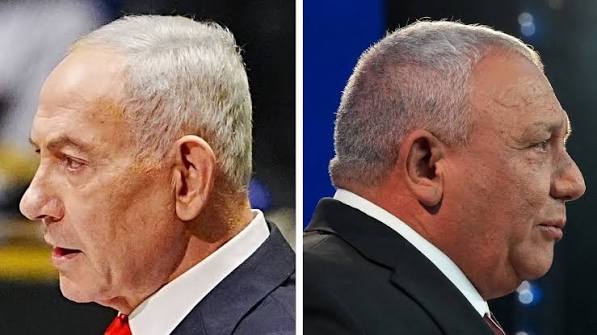
Israel’s October 27 parliamentary election has delivered another political stalemate, leaving Prime Minister Benjamin Netanyahu fighting to retain power while opposition leader Gadi Eisenkot struggles to assemble a governing coalition.
The final vote count, published by Israel’s Central Elections Committee on October 30, leaves Netanyahu’s political bloc with 53 seats in the 120-member Knesset.
Eisenkot’s opposition bloc secured 48 seats, while parties representing Palestinian citizens of Israel captured a historic 19 seats.
A parliamentary majority requires 61.
Neither major political camp has enough.
🔴 Help keep this independent voice alive and uncensored.
Support independent journalism and help keep Real Raw News going.
👉 Support Chris Wick on GoFundMe
And neither appears particularly willing to make the compromises necessary to change that.
For a country already dealing with the consequences of years of conflict, domestic political divisions and mounting international scrutiny, another prolonged political crisis could hardly come at a more difficult moment.
The Election Is Over. The Political Battle Is Just Beginning.
Israel’s election attracted an impressive 77.9 percent voter turnout.
Millions participated in the democratic process, expecting their votes to determine the country’s political direction.
Instead, the results have exposed a deeply divided electorate and a political system in which forming a government may prove considerably more difficult than winning votes.
Netanyahu’s Likud party emerged as the largest individual party, securing 27 parliamentary seats.
Eisenkot’s Yashar party followed with 21.
But Israel does not elect its prime minister directly through a separate national vote.
Its parliamentary system requires political parties to negotiate governing coalitions capable of commanding majority support.
That means the largest party does not automatically control the government.
And it means politicians who spent months attacking one another may now have to consider working together.
The uncomfortable reality is that the voters have delivered a divided parliament, leaving politicians responsible for finding a workable solution.
Whether they are prepared to do so remains uncertain.
Netanyahu’s Greatest Advantage May Be the Political Deadlock Itself
Benjamin Netanyahu has survived political crises that would have ended many political careers.
Now, another inconclusive election could provide him with something extraordinarily valuable: time.
Under Israel’s parliamentary procedures, President Isaac Herzog will consult political parties before assigning a candidate the responsibility of forming a government.
That candidate generally receives 28 days, with a possible 14-day extension.
If the effort fails, another candidate may be given an opportunity.
Additional parliamentary procedures can follow before another election becomes necessary.
Throughout this process, Netanyahu can remain in office as caretaker prime minister until a replacement government is established.
That creates an unusual political situation.
A leader whose existing parliamentary bloc failed to secure a majority can continue exercising executive authority while his opponents struggle to agree on an alternative.
This does not mean Netanyahu has stolen the election or is acting outside the law.
Caretaker arrangements are a recognized feature of Israel’s parliamentary system.
But they demonstrate how political paralysis can benefit an incumbent even when voters have denied his preferred coalition a majority.
In politics, sometimes the person who cannot win outright still benefits when everyone else fails to agree.
The 19 Seats That Could Change Everything
Perhaps the most revealing development in Israel’s election is the performance of Arab-led political parties.
Together, they secured 19 seats.
The Joint List won 11, while the United Arab List, commonly known as Ra’am, secured eight.
Those seats could potentially determine who governs Israel.
Consider the arithmetic.
Eisenkot’s opposition bloc holds 48 seats.
Adding the 19 seats held by Arab-led parties would produce a theoretical total of 67.
That would exceed the 61 seats required for a parliamentary majority.
However, arithmetic does not automatically translate into political cooperation.
Eisenkot and several other opposition leaders have rejected forming a government dependent on the participation of Arab-led parties.
This creates a striking contradiction.
Political leaders seeking to remove Netanyahu may be unwilling to cooperate with the very representatives whose support could make that possible.
The issue raises a broader democratic question.
If elected representatives hold enough seats to influence government formation, should their political participation be dismissed because of their ethnic identity or the positions of their parties?
Political disagreements are legitimate.
But refusing even to consider cooperation can have consequences extending far beyond party loyalty.
For Israel’s Palestinian citizens, who constitute a substantial portion of the population, the outcome could determine whether their elected representatives exercise meaningful influence over national decisions.
And for Eisenkot, it could determine whether his campaign to replace Netanyahu produces an actual change in government.
Election Fraud Allegations Add Another Dangerous Dimension
The political crisis has also been complicated by allegations surrounding the election itself.
Netanyahu’s Likud party has promoted claims that Arab-led parties benefited from improper foreign assistance and that the election was stolen.
Those allegations have not been substantiated.
Israeli police have reported finding no evidence supporting broader claims of systematic election theft.
The Central Elections Committee has also rejected allegations of widespread voting irregularities.
Separately, Israel’s Shin Bet security agency has been asked to examine specific suspicions involving possible foreign interference.
That investigation should not be confused with proof that election fraud occurred.
Qatar and Türkiye have rejected accusations that they improperly interfered in the election.
The distinction matters.
Investigating credible allegations is an essential part of protecting electoral integrity.
But presenting unverified suspicions as established facts risks undermining public confidence before investigators have reached their conclusions.
Israel is not alone in confronting this problem.
Across democratic societies, allegations of electoral misconduct can become powerful political weapons.
And once public trust in election results begins to deteriorate, restoring that confidence can prove far more difficult than damaging it.
Could Netanyahu and Eisenkot Form a Unity Government?
One possible solution would involve a broad coalition bringing together Netanyahu’s Likud party and opposition factions.
A potential arrangement involving Likud, Yashar and other centrist or right-wing parties could produce a parliamentary majority.
Reuters has outlined one possible combination capable of reaching approximately 66 seats.
On paper, such a government could provide political stability.
In practice, it would require major concessions.
Eisenkot has campaigned on replacing Netanyahu.
Other opposition figures have similarly opposed joining a government led by the current prime minister.
Netanyahu, meanwhile, would potentially have to distance himself from longstanding far-right and ultra-Orthodox political allies.
Such a deal could anger supporters on both sides.
Yet political history demonstrates that coalitions once considered impossible can become attractive when the alternatives are prolonged instability or another election.
A unity government remains possible.
Whether either leader is prepared to pay the political price is another question.
Another Election Could Leave Israel Right Where It Started
If coalition negotiations collapse, Israel could return to the polls.
That possibility is hardly reassuring.
Another election would consume public resources, extend political uncertainty and potentially reproduce the same parliamentary divisions.
There is no guarantee that a second vote would deliver a clearer result.
Indeed, repeated elections can sometimes deepen polarization as political parties become increasingly focused on defeating their rivals rather than developing workable governing arrangements.
Israel has experienced recurring political instability in recent years.
Another election would reinforce concerns that the country’s political system is struggling to translate electoral outcomes into stable leadership.
Meanwhile, significant decisions involving national security, economic priorities, international relations and the future of the Palestinian territories cannot simply be placed on indefinite hold.
A caretaker government can continue exercising important responsibilities.
But prolonged uncertainty over political leadership can complicate longer-term planning and accountability.
What Does This Mean for Gaza and the Palestinians?
The consequences of Israel’s political deadlock extend beyond the Knesset.
Israel’s government faces difficult questions involving Gaza, the occupied West Bank, regional security and relations with neighbouring countries.
The October 2026 election was the country’s first national parliamentary vote since the Hamas-led attacks of October 7, 2023, and Israel’s subsequent devastating military campaign in Gaza.
Those events continue to shape Israeli politics and international debate.
A change in government would not automatically produce a fundamental transformation in Israeli policy toward Palestinians.
Eisenkot is a former Israeli military chief, and much of the opposition remains committed to established Israeli security priorities.
Nevertheless, the composition of the next government could influence military decisions, settlement policy, diplomatic negotiations and the possibility of future political agreements.
The political participation of Arab-led parties could also affect which issues receive attention inside the Knesset.
For Palestinians living under occupation and for civilians affected by the wider conflict, the consequences of Israel’s internal political struggles are far from abstract.
Decisions made in Jerusalem can have immediate effects on their lives.
A Democracy Facing an Uncomfortable Test
Israel’s election has exposed more than a disagreement between Netanyahu and Eisenkot.
It has revealed the difficulty of governing a deeply divided society when political leaders reject potential coalition partners and voters distribute parliamentary power among competing blocs.
The election itself produced a legitimate result.
The challenge now is whether the country’s political institutions and elected representatives can translate that result into functioning government.
Netanyahu has a path to retaining power.
Eisenkot has a possible path to replacing him.
Arab-led parties possess significant parliamentary influence.
But every available option requires someone to reconsider a political position, negotiate with an adversary or accept an outcome that may disappoint supporters.
The alternative is another election, another expensive political campaign and potentially another inconclusive result.
And while political leaders negotiate, ordinary citizens remain subject to the decisions of a government whose long-term future remains uncertain.
Real Raw News | Final Thought
The most revealing thing about Israel’s election may not be who won the most seats. It may be who refuses to recognize the political power of those who won the others.
Netanyahu’s bloc failed to secure a majority.
Eisenkot’s bloc failed to secure a majority.
Yet 19 parliamentary seats held by Arab-led parties could potentially alter the entire political landscape.
Instead of producing a straightforward transfer of power, the election has become a test of political flexibility, institutional legitimacy and democratic representation.
There is nothing inherently undemocratic about a hung parliament.
Coalition negotiations are a normal part of parliamentary democracy.
But when politicians place personal rivalries and political red lines above every possible governing arrangement, voters are entitled to question whether their representatives are serving the public or protecting their own political positions.
Israel’s voters have delivered their verdict. Now its political leaders must decide whether they are prepared to govern according to it.
And if they cannot?
The country may find itself voting again, with no guarantee that anything will change.
Sources
- Al Jazeera — October 30, 2026
How can Israel break its election deadlock?
https://www.aljazeera.com/news/2026/10/30/how-can-israel-break-its-election-deadlock - Associated Press — October 30, 2026
Difficult negotiations lie ahead in Israel after Netanyahu’s bloc lost its parliamentary majority.
https://apnews.com/article/3a793c0d07fdfe515390524b849d8674 - Reuters — October 29, 2026
How could Israel break the election deadlock?
https://ca.marketscreener.com/news/how-could-israel-break-the-election-deadlock-ce785cd3df80fe2d - Hürriyet Daily News — October 30, 2026
Israel faces coalition deadlock after inconclusive vote.
https://www.hurriyetdailynews.com/israel-faces-coalition-deadlock-after-inconclusive-vote-228785
Editorial Disclaimer
This article contains independently written news analysis and political commentary based on publicly available reporting and election information as of October 30, 2026.
Statements concerning potential coalitions, political motivations and future election outcomes are analysis or informed speculation, not established facts.
Allegations of election fraud or foreign interference remain unproven unless supported by verified investigative findings.
Real Raw News does not endorse any Israeli political party or candidate. The purpose of this article is to examine the election results, competing political interests and potential consequences for democratic governance.
About the Author