Something unusual is happening on the remote eastern edge of Greenland: drilling equipment has arrived, but the company behind the operation does not yet have permission to drill.
That would be a bureaucratic dispute under ordinary circumstances. But this is Greenland, where President Donald Trump has repeatedly argued that the United States should control the strategically important territory. And the company now preparing an oil exploration project has ties to several people in Trump’s orbit.
The details raise a much bigger question: is oil exploration becoming part of a broader American push to establish a foothold in Greenland?
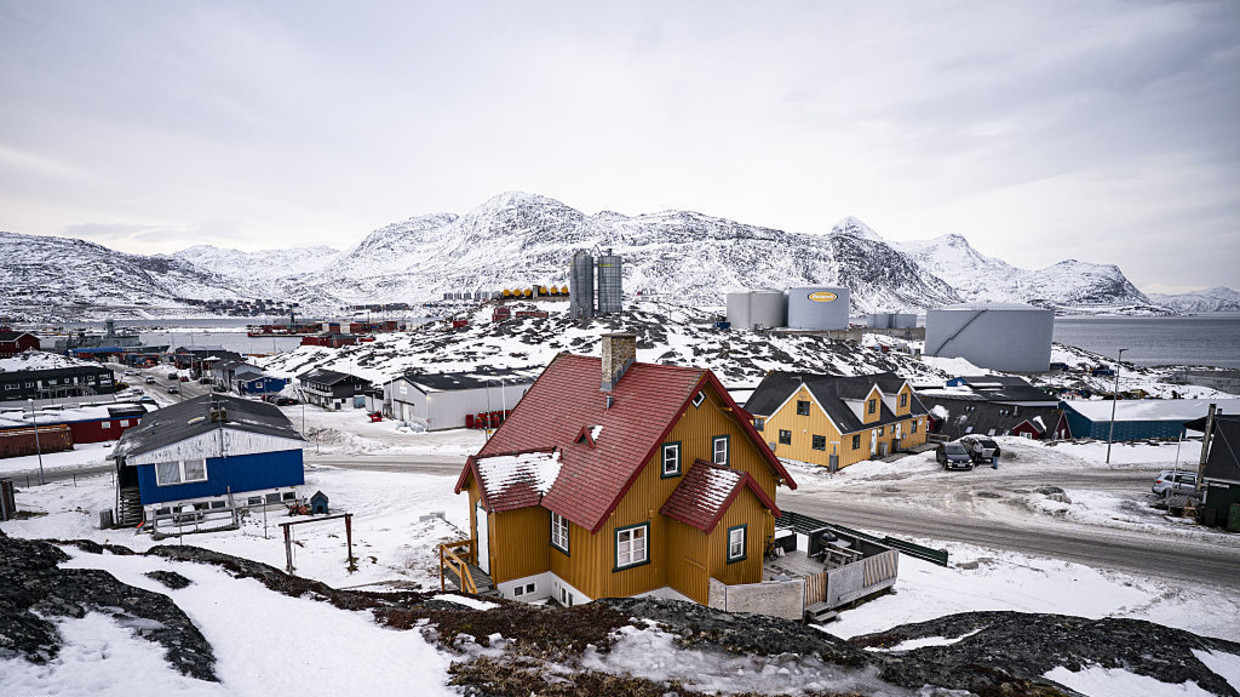
According to the original report from RT World News, a cargo vessel recently delivered an excavator and 15 containers of equipment to Nerlerit Inaat, roughly 450 kilometres north of the Arctic Circle. The equipment was reportedly destined for the Texas-based Greenland Energy Company.
Greenland’s Energy Ministry says the company did not have permission to deliver the equipment and has not received the permits required to drill in Jameson Land, an environmentally protected wetland area.
Yet Greenland Energy has been moving ahead as though exploration is coming.
🔴 Help keep this independent voice alive and uncensored.
Support independent journalism and help keep Real Raw News going.
👉 Support Chris Wick on GoFundMe
The company has publicly documented the movement of equipment and said another shipment containing hundreds of containers of drilling machinery is expected to leave Canada in September. A company representative has also said exploratory drilling is planned.
There is an important complication.
Greenland stopped issuing new oil drilling licences in 2021 after decades of exploration failed to uncover significant deposits. Officials concluded that the potential environmental consequences outweighed what they viewed as limited economic returns.
Jameson Land is different only in that an existing licence remains in place. It is held by the British company 80 Mile, with Greenland Energy proposing to finance exploration in exchange for a substantial share of future revenue.
The American company nevertheless still needs Greenlandic approval before it can actually drill.
And officials in Nuuk have indicated that the project remains in the exploration stage.
The oil claim that changes the stakes
Greenland Energy believes the Jameson Land Basin could contain crude worth as much as $1 trillion.
That figure is an estimate, not a confirmed discovery.
The company plans to spend approximately $60 million on an exploratory well to find out whether the oil is actually there. Its chief executive, Robert Price, has acknowledged the uncertainty: the company believes the resource exists, but only drilling can establish whether that belief is justified.
That distinction matters.
Greenland has experienced decades of unsuccessful oil exploration. A potentially enormous discovery could therefore transform the economic and geopolitical calculations surrounding the island—but until exploration produces evidence, the claimed resource remains just that: a claim.
Why Trump’s Greenland policy makes the story more complicated
Trump’s interest in Greenland is hardly new.
During his second term, he has repeatedly argued that the United States needs control of the territory for national-security reasons, including the possibility of incorporating it into his proposed “Golden Dome” missile-defense system. He has also pointed to Greenland’s rare-earth mineral resources.
Oil has not been the central public argument.
But several people connected to Trump have links to Greenland Energy.
Louisiana Governor Jeff Landry, Trump’s special envoy to Greenland, has openly promoted greater American involvement in Greenland and argued that oil exploration should be part of that effort.
The company has also added Carol Craig, a U.S. Navy veteran and defense-industry executive, to its board. Craig’s aerospace company was involved in a major contract connected to the Golden Dome program.
Then there is television personality Dr. Phil McGraw, a Trump ally who campaigned with the president in 2024. Greenland Energy hired him to produce a documentary series following its drilling operation.
Individually, those connections do not establish that the Trump administration is directing the oil project.
But together, they make the timing and circumstances difficult to ignore.
A potential collision with Denmark
The most sensitive part of the story may not be what is beneath Greenland’s ground—but who has the authority to decide what happens there.
Greenland is self-governing, while Denmark retains responsibility for certain areas of foreign and security policy. Copenhagen has repeatedly rejected Trump’s calls for American control.
Danish Prime Minister Mette Frederiksen has maintained that decisions concerning Greenland belong to Denmark and Greenland.
Trump has previously gone further than simply proposing a purchase, saying military force to seize Greenland could not be ruled out.
Against that backdrop, an American-backed company sending heavy exploration equipment into Greenland without the necessary permits inevitably carries a larger political significance.
The company itself has not publicly linked its drilling operation to Trump’s annexation ambitions.
That does not prove that such a connection exists.
It does, however, create an unusual overlap between American political ambitions, strategic interests and a potentially enormous natural-resource play.
The billion-dollar question
Everything ultimately depends on what the drill bit finds.
If Greenland Energy discovers a major commercially viable oil deposit, the implications could extend well beyond the energy industry. A resource of that scale could make Greenland even more strategically valuable to Washington and intensify an already extraordinary dispute over the territory’s future.
If the exploration fails, much of the speculation surrounding Greenland’s oil potential could disappear just as quickly.
For now, there is no confirmed trillion-dollar oil field.
There is equipment on the ground, a company preparing for exploration, unresolved permitting questions, and a U.S. president who has repeatedly insisted that Greenland should come under American control.
That combination is enough to make the next drilling decision worth watching very closely.
About the Author