There are conflicts that reshape borders, and then there are those that quietly erase identity. In Iran, a different kind of crisis has been unfolding—one that doesn’t always make headlines but carries consequences that may last far longer than any political standoff.
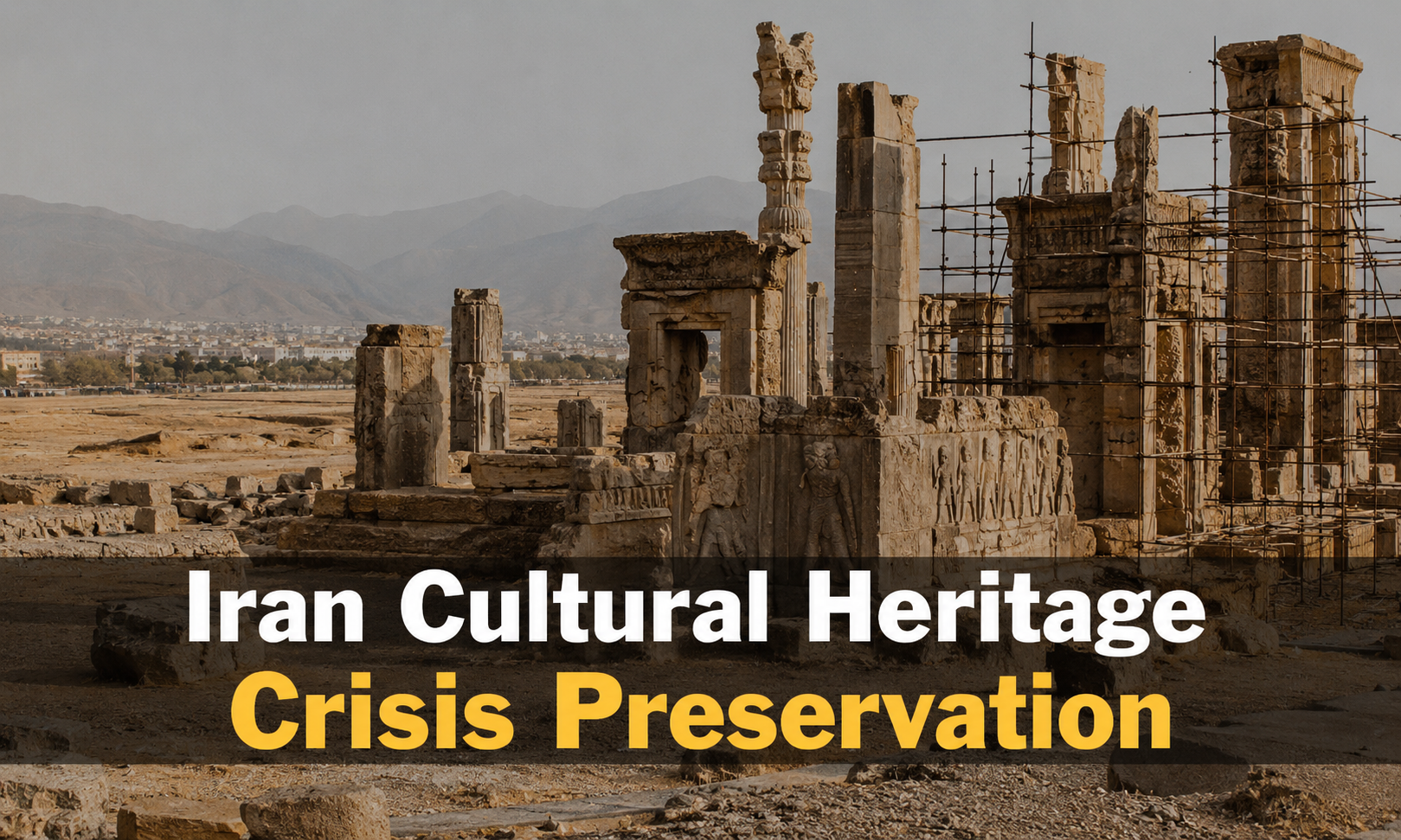
Across the country, some of the world’s oldest cultural sites—remnants of empires, religions, and civilizations that predate modern nations—are increasingly caught in a tightening web of political pressure, economic strain, and institutional neglect. What’s emerging is not a single act of destruction, but a slow, systemic unraveling of heritage that once defined the region.
According to a detailed investigation by Reuters (https://www.reuters.com/investigates/special-report/iran-crisis-cultural-heritage/), Iran’s vast cultural infrastructure—spanning ancient ruins, museums, and historic artifacts—is under mounting threat. The report reveals how internal challenges, from budget shortfalls to shifting political priorities, are putting immense strain on preservation efforts that were already fragile.
At the heart of the issue lies a difficult balancing act. Iran holds one of the richest cultural legacies in the world, with sites dating back thousands of years, including those tied to the Persian Empire, early Islamic history, and even pre-Islamic civilizations. Yet safeguarding these treasures requires consistent funding, expertise, and political will—resources that are increasingly stretched thin.
Economic sanctions have played a significant role. As Iran’s economy tightens under international pressure, government budgets have been forced to prioritize immediate needs over long-term cultural investment. Preservation projects are delayed. Archaeological work is scaled back. Maintenance of historic sites becomes inconsistent.
But the situation is more complex than economics alone.
🔴 Help keep this independent voice alive and uncensored.
Support independent journalism and help keep Real Raw News going.
👉 Support Chris Wick on GoFundMe
The Reuters investigation points to internal dynamics within Iran’s cultural institutions, where leadership changes and bureaucratic friction have created uncertainty around decision-making. Experts cited in the report describe an environment where professional oversight is sometimes sidelined, and where long-term preservation strategies can be disrupted by political shifts.
In some cases, development projects have taken precedence over conservation. Construction near or even on historically significant land has raised alarms among archaeologists and historians, who warn that once these sites are damaged, they cannot be replaced. Unlike modern infrastructure, cultural heritage is not renewable.
There is also a growing concern about the illicit trade of artifacts. When oversight weakens and economic hardship rises, black markets tend to follow. Smuggled antiquities—some of them priceless—can disappear into private collections abroad, effectively removing pieces of history from public access forever.
What makes this crisis particularly significant is the scale. Iran is not just another country with historical landmarks—it is a cornerstone of human civilization. The land has witnessed the rise and fall of empires, the spread of major religions, and the evolution of art, science, and governance. The loss of its heritage is not just a national issue—it is global.
Yet inside Iran, awareness of the problem is growing. Cultural advocates, historians, and even some officials have begun raising concerns more openly, warning that without urgent intervention, the damage could accelerate.
There is also an emotional dimension that cannot be ignored. Cultural heritage is not just about artifacts or ruins—it is about identity. It shapes how people understand their past and, by extension, their future. When that connection weakens, the effects ripple beyond academia or tourism—they reach into the fabric of society itself.
The situation raises difficult questions. Can a country under economic and political pressure realistically protect its past? And if not, what happens when that past begins to disappear?
For now, much of this crisis remains out of sight, unfolding quietly across deserts, cities, and museum halls. But the implications are anything but small.
Because once history is lost, it doesn’t come back.
And in Iran, time may be running out.
About the Author