A quiet shift in how cutting-edge AI reaches the public is unfolding in real time—and it’s happening behind closed doors between Silicon Valley and Washington.
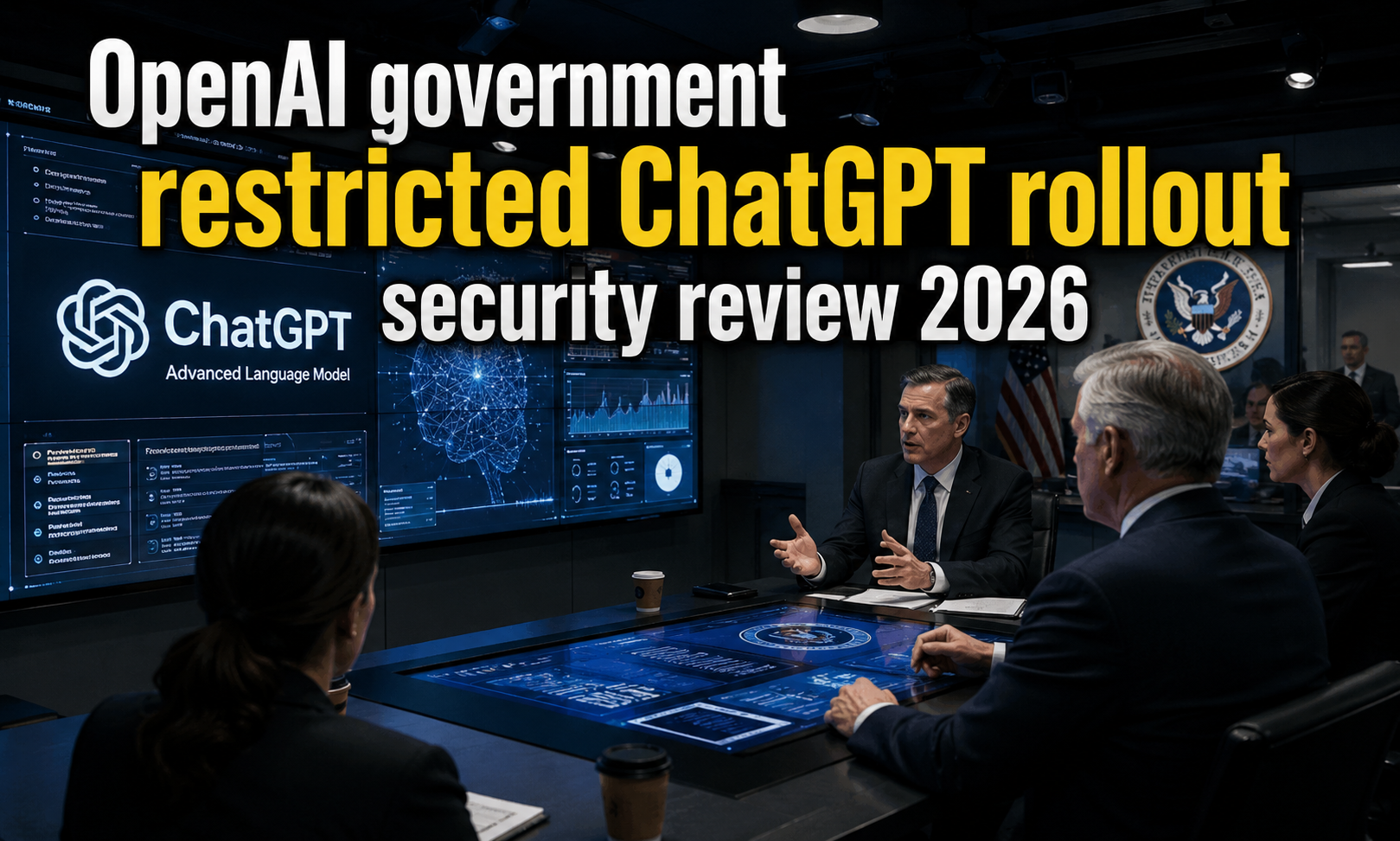
OpenAI has moved to restrict the initial rollout of its newest advanced ChatGPT model after a request from the U.S. government, according to reporting first published this week in a Reuters-linked investigation and corroborated by multiple outlets tracking the developing policy. The move effectively places early access to the system in the hands of a small group of government-approved partners before any wider public release.
The decision marks one of the clearest examples yet of direct government involvement in controlling access to frontier AI systems before they reach everyday users. Officials are reportedly focused on assessing national security risks tied to advanced models—especially concerns around cyberattacks, automated hacking, and potential military misuse.
What makes the situation unusual is not just the restriction itself, but the timing: it comes at a moment when AI companies are racing to deploy increasingly powerful systems while governments scramble to understand what those systems can actually do once widely released.
Inside OpenAI, the company has described the limited release as temporary. The goal, according to statements shared through reporting, is to allow vetted testing partners to evaluate the model under controlled conditions while a broader security framework is developed with federal agencies.
But the company has also signaled discomfort with the arrangement, warning that a government-led approval process for customers could become a precedent that slows innovation and limits access to emerging technology.
🔴 Help keep this independent voice alive and uncensored.
Support independent journalism and help keep Real Raw News going.
👉 Support Chris Wick on GoFundMe
A new kind of “pre-release gatekeeping”
Traditionally, governments regulate technology after it is released—through laws, audits, or enforcement actions. What is emerging here is different: a system where access itself is being filtered before public availability.
Under the current arrangement, only select U.S.-approved organizations are being allowed to test the model first, while broader release is delayed pending further review.
Supporters of the approach argue it is a necessary response to the speed at which AI capabilities are advancing. Frontier models today are not just conversational tools—they can generate code, assist with cybersecurity tasks, and potentially be adapted for offensive digital operations.
Critics, however, warn that the line between safety testing and political control is becoming increasingly blurred. If government approval becomes a standard requirement for access, they argue, it could reshape how AI products are distributed globally—and who gets to use them first.
Industry pressure and global implications
The development does not exist in isolation. Competing AI firms are also facing heightened scrutiny, with parallel discussions around restricting or vetting advanced models before deployment.
This broader trend reflects growing concern in Washington that AI systems may evolve faster than regulatory frameworks can respond, creating a gap between technological capability and oversight capacity.
At the same time, industry leaders have cautioned that overly restrictive access controls could slow innovation and weaken the competitive position of U.S. firms in a rapidly intensifying global AI race.
For now, OpenAI maintains that the restricted rollout is temporary and tied specifically to safety evaluation. But the precedent being set—government-influenced gating of AI access before public release—may be difficult to unwind once established.
As the boundaries between national security, corporate innovation, and public access continue to blur, the question is no longer just what AI systems can do—but who gets to decide when and how the public gets to use them.
About the Author