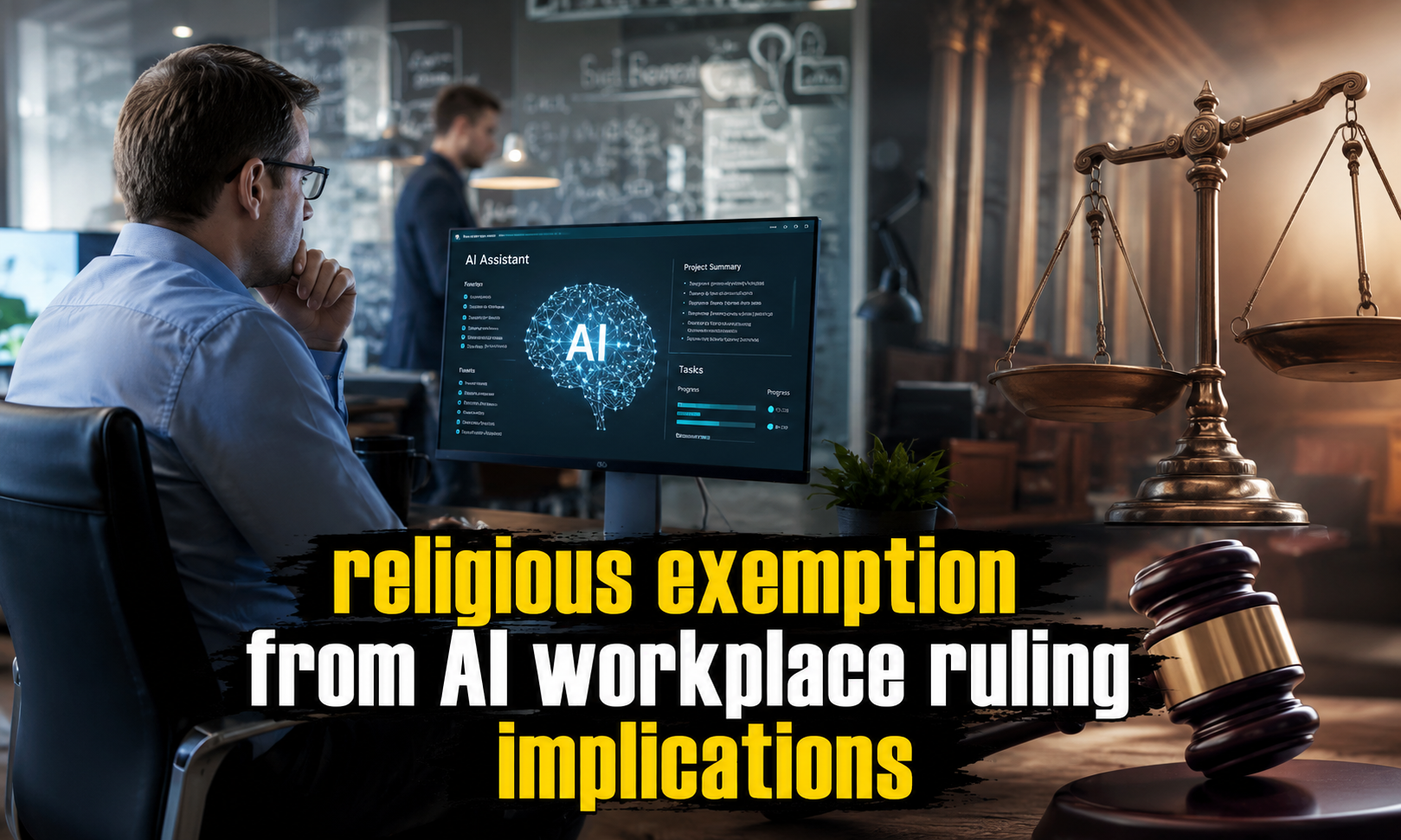
A recent workplace ruling involving artificial intelligence is reigniting debate over how far religious accommodations can stretch in modern employment — especially as AI becomes embedded in everyday job requirements.
According to reporting from the Children’s Health Defense publication, a U.S. worker was recently granted a religious exemption from being required to use AI tools in her job, a decision that some legal observers say could have ripple effects beyond technology policy and into other areas of exemption law. The report can be read here: https://childrenshealthdefense.org/defender/worker-wins-religious-exemption-from-ai-could-it-boost-case-vaccine-exemptions/
At the centre of the discussion is a growing legal question: if employers must accommodate sincerely held religious objections to emerging technologies like AI, could similar reasoning strengthen arguments in other contested exemption cases, including medical or vaccine-related mandates?
The case itself reflects a broader shift already visible in U.S. employment law. Under federal protections such as Title VII of the Civil Rights Act, employers are required to consider reasonable accommodations for workers whose religious beliefs conflict with workplace rules — unless doing so creates an undue hardship.
What makes this situation stand out is not just the technology involved, but the timing. Companies across industries are rapidly integrating AI systems into workflows, from software development to customer service, making AI use increasingly difficult for workers to opt out of without requesting formal exemptions.
Legal experts cited in the broader discussion around the case suggest that courts have recently raised the threshold for denying religious accommodations, particularly after a series of rulings that strengthened employees’ rights to claim exemptions when beliefs are deemed sincere and not disruptive beyond a substantial burden on employers.
🔴 Help keep this independent voice alive and uncensored.
Support independent journalism and help keep Real Raw News going.
👉 Support Chris Wick on GoFundMe
That shift is what has drawn attention to this AI exemption. If courts continue to interpret religious accommodation broadly, some analysts argue it could encourage a new wave of workplace challenges — not only involving AI, but also other mandated technologies, policies, or medical requirements where religious objections are raised.
Still, others caution that AI-related exemptions may remain narrow in scope. Unlike vaccine mandates or healthcare requirements, AI usage is typically framed as a productivity tool rather than a public health measure, which could limit how far courts are willing to extend precedent.
For now, the case is being closely watched by employment lawyers, HR departments, and civil liberties advocates alike, as organizations navigate the increasingly complex intersection of faith, technology, and workplace compliance in a rapidly evolving digital economy.
About the Author