The Middle East is sliding deeper into a nightmare that no diplomatic statement can conceal. Yemen’s Houthis are claiming fresh attacks against Saudi Arabia’s oil infrastructure, Riyadh is turning to Beijing for help easing regional tensions, and Washington is threatening renewed military action against Iran. What began as a confrontation with Tehran is increasingly threatening the arteries of the global economy — and ordinary people could end up paying the price for a war they never asked for.
Saudi Arabia’s Oil Lifeline Is Under Threat
On November 13, Al Jazeera reported that Saudi Foreign Minister Faisal bin Farhan Al Saud held discussions with China’s Middle East envoy, Zhai Jun, concerning Houthi attacks and efforts to prevent further regional escalation.
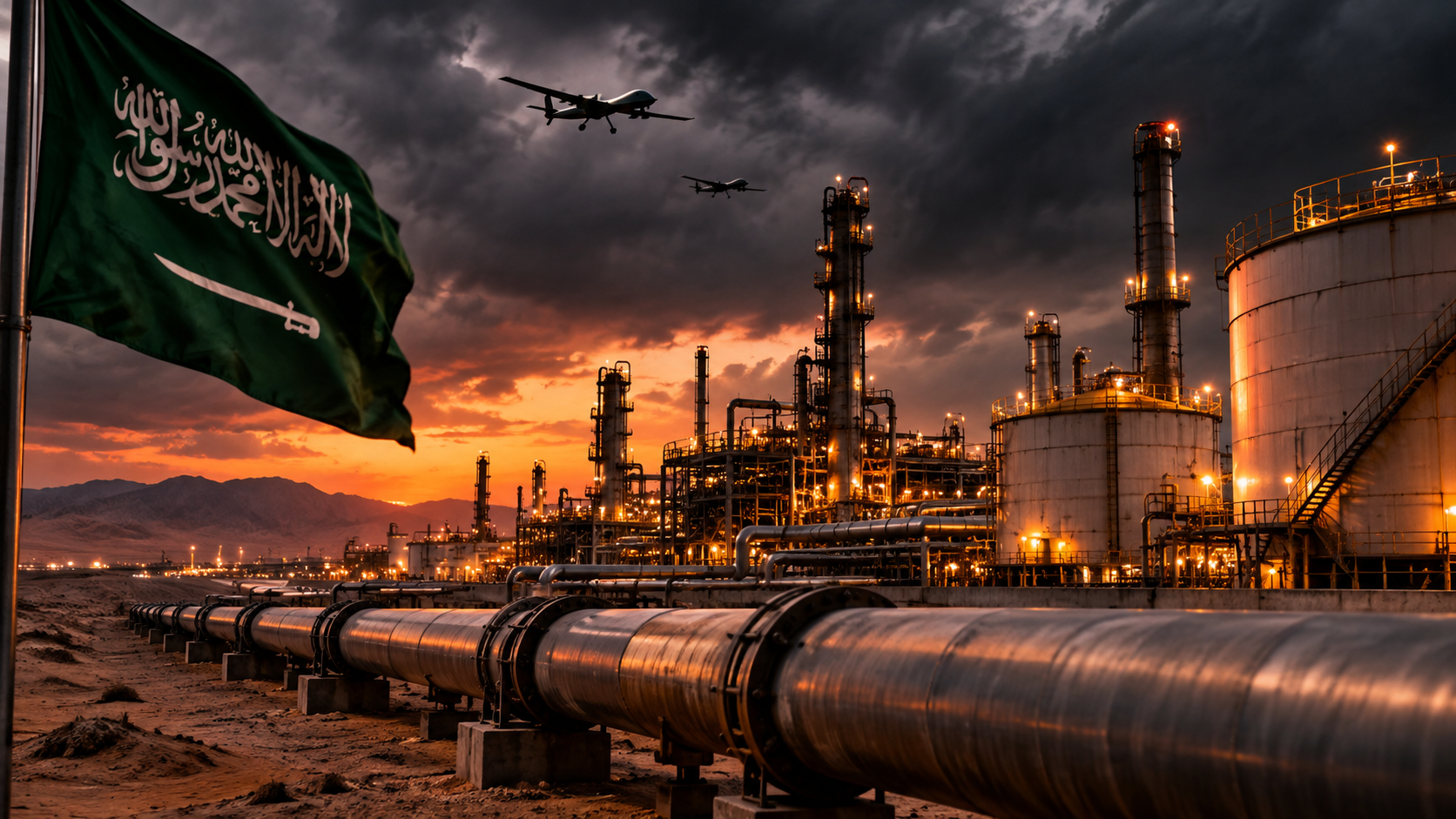
The diplomatic engagement comes as Yemen’s Iran-aligned Houthis claim attacks against Saudi energy infrastructure, including facilities associated with the kingdom’s state-owned oil giant, Saudi Aramco.
According to Reuters, the group claimed strikes against a pumping station on Saudi Arabia’s East-West oil pipeline, an oil installation in Yanbu and an Aramco building in Riyadh.
Saudi authorities have not independently confirmed all the claimed strikes or their consequences. However, the Saudi-led military coalition reported intercepting Houthi drones threatening the capital and the country’s Eastern Province.
The distinction matters. An intercepted drone is not a destroyed refinery. But repeated attempts to strike critical infrastructure expose a vulnerability that cannot simply be dismissed.
🔴 Help keep this independent voice alive and uncensored.
Support independent journalism and help keep Real Raw News going.
👉 Support Chris Wick on GoFundMe
The Pipeline That Could Become a Global Economic Chokepoint
Saudi Arabia’s East-West pipeline is more than a piece of industrial infrastructure. It is a crucial alternative route for exporting oil when shipping through the Strait of Hormuz is disrupted.
The pipeline transports crude across the Arabian Peninsula to Yanbu on the Red Sea, allowing Saudi Arabia to bypass the Persian Gulf’s increasingly dangerous maritime routes.
Reuters reported that roughly four million barrels of Saudi crude per day have been redirected through this system — equivalent to approximately 4 percent of global oil supply.
That makes the latest Houthi claims particularly alarming.
If sustained attacks were to seriously disrupt the pipeline or its associated export facilities, the consequences could extend far beyond Saudi Arabia.
Fuel prices could climb. Transportation costs could rise. Businesses already struggling with expensive energy could face another financial shock.
And once again, the people least responsible for geopolitical decisions could be left paying for them.
China Enters the Diplomatic Battlefield
Riyadh’s discussions with Beijing reveal another important dimension of this crisis.
China has enormous economic interests in Middle Eastern stability. Its relationship with Saudi Arabia, alongside its ties with Iran, gives Beijing a diplomatic role that Washington cannot easily replicate.
The Chinese government’s involvement does not mean a breakthrough is imminent. There is no confirmed agreement ending the Houthi attacks.
But it raises an uncomfortable question about the changing balance of power.
If Saudi Arabia must increasingly rely on Chinese diplomacy to contain a conflict involving Iran and its regional allies, what does that say about the effectiveness of America’s longstanding security relationships in the Gulf?
Washington retains considerable military influence. Yet military power alone has not eliminated the threats facing Saudi infrastructure.
Trump Threatens More War as Gulf Allies Seek Restraint
US President Donald Trump has indicated that he remains prepared to authorize further strikes against Iran.
However, Trump also said that Gulf partners, including Saudi Arabia and Qatar, had encouraged him to hold back from additional large-scale military action.
The contradiction is striking.
Washington is threatening escalation while some of the countries most exposed to Iranian retaliation are reportedly asking for restraint.
Meanwhile, Iran’s Islamic Revolutionary Guard Corps claimed it targeted an American early-warning radar installation in Bahrain. The United States subsequently denied the radar was struck, saying it intercepted two drones.
The competing accounts underline how rapidly claims and counterclaims are emerging across an expanding battlefield.
The Dark Reality: Ordinary People Will Pay
The greatest danger is no longer confined to a single military confrontation.
It is the possibility that simultaneous crises across Iran, Yemen, Saudi Arabia and the surrounding waterways could trigger a wider breakdown in energy security and international commerce.
Politicians can promise decisive victories. Military commanders can announce successful interceptions. Diplomats can issue carefully worded appeals for restraint.
None of that guarantees affordable fuel, secure shipping routes or an end to the fighting.
The Middle East is demonstrating a brutal truth about modern warfare: a conflict thousands of kilometres away can reach directly into the wallets of families who have no influence over the decisions driving it.
The missiles may be flying over Saudi Arabia, but the economic fallout could land on millions of households around the world.
Sources:
- Al Jazeera — Iran war live: Saudi-China talks, Houthi attacks and regional escalation
- Reuters — Houthis claim attacks on Saudi Arabia’s East-West oil pipeline
About the Author