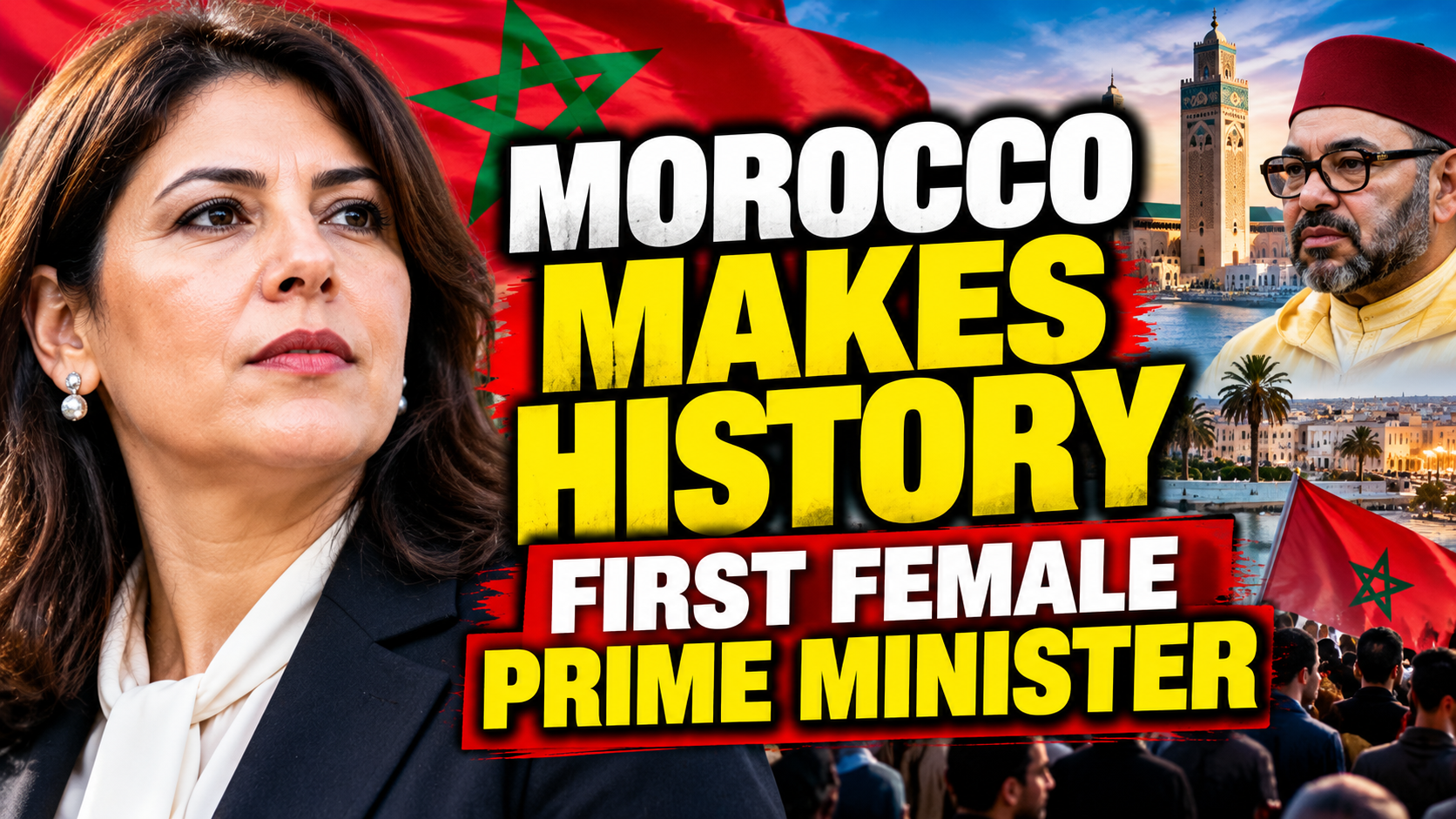
Morocco has entered unfamiliar political territory with Fatima Ezzahra El Mansouri becoming the country’s first female prime minister.
King Mohammed VI appointed Mansouri following parliamentary elections in which her Authenticity and Modernity Party, commonly known as PAM, emerged with the largest number of seats.
It is a historic appointment for Morocco, but winning the most seats is only the beginning.
Mansouri must now build a coalition capable of commanding a majority in parliament.
PAM Wins 97 Seats but Falls Short of a Majority
PAM secured 97 of the 395 seats in Morocco’s lower house in the September 23 election.
That puts the party ahead of its rivals but nowhere near the number of seats required to govern alone.
🔴 Help keep this independent voice alive and uncensored.
Support independent journalism and help keep Real Raw News going.
👉 Support Chris Wick on GoFundMe
Outgoing Prime Minister Aziz Akhannouch’s National Rally of Independents finished with 66 seats, while Istiqlal secured 65.
That leaves Mansouri facing what may be her first major political test as prime minister: negotiating a workable Morocco coalition government from a fragmented parliament.
During the campaign, PAM rejected the idea of simply rebuilding its previous governing arrangement with Akhannouch’s party.
Mansouri has since indicated, however, that she has no “red lines” heading into coalition negotiations.
Politics has a way of making yesterday’s opponents tomorrow’s partners.
A Historic First for Morocco
Mansouri’s appointment carries significance far beyond the arithmetic of coalition building.
The 50-year-old lawyer previously served as Morocco’s housing minister and mayor of Marrakech.
She now becomes Morocco’s first woman prime minister and only the second woman to hold the position of prime minister in an Arab country.
Tunisia’s Najla Bouden previously served as prime minister from 2021 until 2023.
Whatever happens next politically, Mansouri has already broken a barrier that had stood throughout Morocco’s modern political history.
Voter Turnout Raises Another Question
There is another number from the Morocco 2026 election that deserves attention.
Turnout reportedly fell to approximately 38%, compared with around 50% during the 2021 election.
That means Morocco has produced a historic political result at the same time that a large majority of eligible voters apparently chose not to participate.
For the incoming government, that could matter.
Winning an election is one thing.
Convincing a disengaged population that government can actually improve people’s lives is something else entirely.
Election Fraud Investigation Adds Another Complication
Mansouri’s appointment also comes as authorities investigate suspected electoral fraud in Tangier.
The investigation reportedly involves allegations that ballots were removed and later returned to polling stations.
Tangier Mayor Mounir Limouri, who is affiliated with PAM, was reportedly placed in police custody as part of the investigation.
Limouri has denied involvement in the alleged ballot tampering.
Several additional suspects have reportedly been detained while investigators continue examining what happened.
PAM has said disciplinary measures could be taken against party members if investigators establish that they were involved.
There is currently no indication in the information available here that the investigation changes the overall national election result.
But it adds another political issue the party will have to navigate while attempting to form a government.
Morocco’s King Still Holds Considerable Power
The appointment of a female prime minister represents a major symbolic milestone, but Morocco’s political system remains different from parliamentary democracies where the prime minister exercises most executive authority.
Under Morocco’s constitution, the king appoints the prime minister from the political party that wins the most parliamentary seats.
King Mohammed VI continues to hold substantial authority, particularly over areas including defense and foreign policy.
That means Mansouri will lead the government, but she will do so within a political system in which the monarchy remains enormously influential.
The 2030 World Cup Will Be Waiting
Whoever ultimately joins Mansouri’s coalition will inherit some enormous responsibilities.
One of the most visible will be Morocco’s preparations to co-host the 2030 FIFA World Cup with Spain and Portugal.
World Cup preparations could bring investment, construction, tourism and international attention.
But major spending connected with the tournament has also become politically sensitive.
Youth-led demonstrations have highlighted frustration over employment, healthcare, education, housing and government priorities.
That puts Morocco’s incoming government in a difficult position.
It must prepare the country for one of the world’s largest sporting events while convincing ordinary Moroccans that their own economic and social concerns aren’t being pushed aside.
Young Moroccans Could Be Mansouri’s Biggest Challenge
Perhaps the most important issue facing the new prime minister isn’t inside parliament at all.
It’s outside it.
Morocco has a large young population with increasingly high expectations about employment, affordable housing and public services.
Political parties attempted to appeal directly to younger voters during the election campaign by promising jobs and more affordable housing.
Now those promises move from campaign speeches to government responsibility.
Mansouri has pledged to pursue “concrete and realistic solutions to citizens’ concerns.”
Those words will now be tested.
Morocco Has Made History — Now Comes the Difficult Part
There is no question that the appointment of Fatima Ezzahra El Mansouri as Morocco’s first female prime minister is historic.
But history alone doesn’t create jobs, lower housing costs, improve hospitals or restore confidence in government.
Mansouri must assemble a coalition, deal with political divisions, respond to frustrated younger Moroccans and oversee preparations for the 2030 World Cup.
And she must do it after an election in which voter turnout reportedly fell to just 38%.
Breaking the political glass ceiling may turn out to have been the easy part.
Now Morocco gets to find out what its first female prime minister intends to do once she’s through it.
About the Author