It didn’t sound like a crisis when it started.
A terse warning. A tight deadline. A demand from the world’s most powerful president aimed at reopening a shipping lane.
But this time, the subtext may matter more than the headlines.
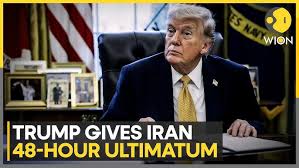
Late last week, President Donald Trump warned Iran it would “obliterate” its energy infrastructure unless the Strait of Hormuz — a vital global artery for oil and gas — was fully reopened within 48 hours. The statement landed like thunder across global markets and national capitals.
The language was stark. Not because it was theatrical, but because of the stakes tied to that narrow waterway. The Strait of Hormuz carries roughly 20% of the world’s daily oil and natural gas exports. Its importance isn’t abstract — it’s measurable in everyday gasoline prices, cargo routes, and geopolitical leverage.
This becomes clearer when looking at the broader trajectory of the conflict now escalating between the U.S., its allies, and Iran. Just days earlier, Iran had responded to joint military strikes by the U.S. and Israel with renewed missile barrages, ballooning tensions into a wider Middle Eastern confrontation.
🔴 Help keep this independent voice alive and uncensored.
Support independent journalism and help keep Real Raw News going.
👉 Support Chris Wick on GoFundMe
The ultimatum over energy infrastructure was not delivered in isolation. It followed a pattern: threats issued publicly, followed by equally severe responses from the other side. Iran retaliated not just with rhetoric but with its own warnings — including threats against U.S. and allied energy and military targets in the Gulf.
A similar pattern appeared in the early days of the war, when attacks on major facilities — including the key South Pars natural gas field — significantly disrupted energy production and strained neighboring economies.
But even beneath these escalating statements, there’s a quieter tension: the gap between public messaging and actual tactical shifts. Trump’s threat was forceful, but it came after remarks suggesting a possible winding down of hostilities. What happened next raised more questions about intent, strategy, and audience.
Analysts note that using public ultimatums as bargaining chips, rather than immediate orders to strike, is a strategy more rooted in signaling than in a literal timetable for military action. It sends a message to Tehran, to global markets, and to allied governments that leverage is being applied — but not necessarily unleashed.
This connects to a broader shift in how conflicts are waged in the modern era: ever more entangled with energy security, economic impact, and narrative control. A threat today doesn’t just echo in capitals — it ripples through oil exchanges, shipping lanes, and election cycles halfway across the world.
By the time the implications are fully visible, it may already be too late for simple de-escalation.
Sources used for article:
Trump threatens Iran’s power plants – reuters.com
Strait of Hormuz crisis overview – wikipedia.org
Iran missile retaliation details – timesofindia.indiatimes.com
About the Author