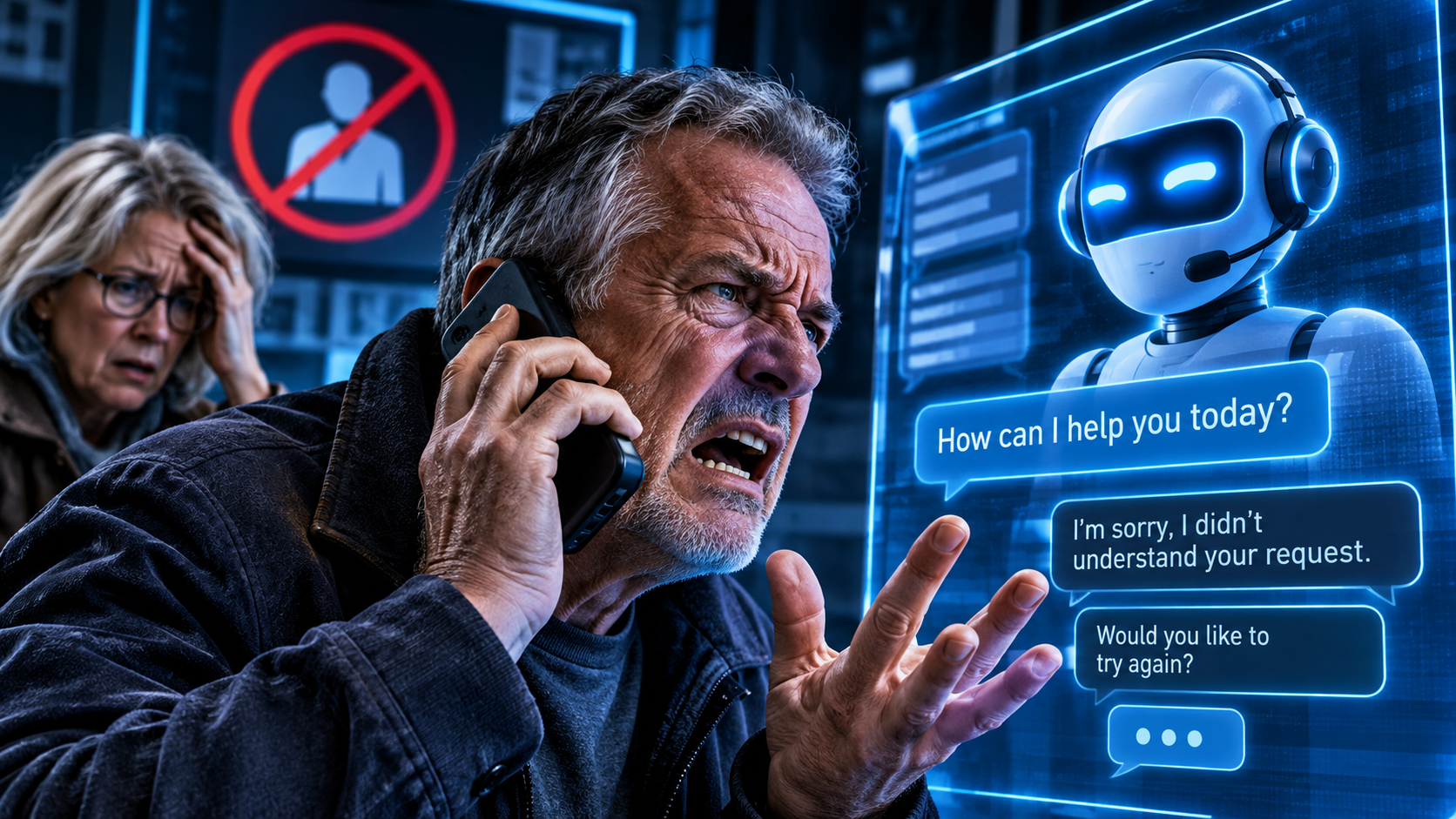
The age of being ignored by a machine may finally be facing a fightback.
Imagine having your money taken, your airline ticket cancelled, your bank account compromised, or an unexplained charge appearing on your credit card. You call the company expecting help. Instead, you’re greeted by an artificial intelligence chatbot that cannot understand your problem, cannot resolve your complaint, and seemingly has no intention of connecting you with someone who can.
Welcome to modern customer service.
And New York City has apparently had enough.
On October 20, 2026, New York City’s Department of Consumer and Worker Protection announced proposed regulations targeting automated customer service systems, including AI chatbots and automated telephone menus. The proposal would require businesses to disclose when customers are dealing with automated systems and provide an accessible way to reach a human representative.
The proposal also seeks to stop companies from repeatedly sending customers through useless menus or supplying irrelevant, misleading, or incorrect answers while pretending meaningful assistance is being provided.
🔴 Help keep this independent voice alive and uncensored.
Support independent journalism and help keep Real Raw News going.
👉 Support Chris Wick on GoFundMe
In an October 29 interview with CBC’s The Current, Commissioner Sam Levine explained why the city believes the problem extends far beyond consumer frustration.
Levine described his own experience attempting to dispute an unexplained hotel charge. The chatbot repeatedly offered irrelevant responses, asked about booking another stay, and failed to answer basic questions. The problem was eventually resolved, but only after he reached an actual human being.
That experience illustrates a much bigger problem.
Companies are increasingly replacing customer service with customer avoidance.
For years, consumers have complained about automated phone systems, endless transfers, disappearing telephone numbers, and customer representatives who appear to have little authority to solve anything. Artificial intelligence threatens to take that already dysfunctional system to another level.
The danger isn’t simply wasted time.
Consider someone trying to stop an unauthorized financial transaction, dispute a mortgage payment, recover a substantial refund, change an airline reservation, or resolve a student loan problem. A chatbot that repeatedly misunderstands the situation isn’t just inconvenient. It can create serious financial consequences.
And there’s another uncomfortable question: Are some companies deploying these systems primarily to improve customer service, or to reduce the number of customers who successfully demand refunds, cancel subscriptions, or challenge questionable charges?
That distinction matters.
New York’s proposed regulations would also make clear that businesses cannot escape responsibility by blaming an automated system for misleading consumers. If a company chooses to deploy the technology, it must remain accountable for what that technology communicates.
Critics may argue that requiring access to human representatives will increase operating expenses. But consumers are already paying for customer service through the prices they pay for products and services.
Why should customers bear the financial consequences when corporations decide that speaking to an employee has become too expensive?
The proposal is not a complete solution. Human representatives can also be unhelpful, and companies can still make complaints unnecessarily difficult. But requiring meaningful access to human assistance would establish an important boundary.
Artificial intelligence should make life easier, not become another corporate obstacle standing between consumers and their own money.
The question now is whether other governments will follow New York’s lead before the human voice becomes a premium service that customers must fight to access.
Because when a company takes your money, you should not have to argue with a machine just to get someone to listen.
Sources
- CBC – Press 0 to escape: NYC says no to AI customer service.
- NYC Department of Consumer and Worker Protection – Official announcement of proposed regulations.
- Ashurst – Legal analysis of the proposed regulations.
About the Author