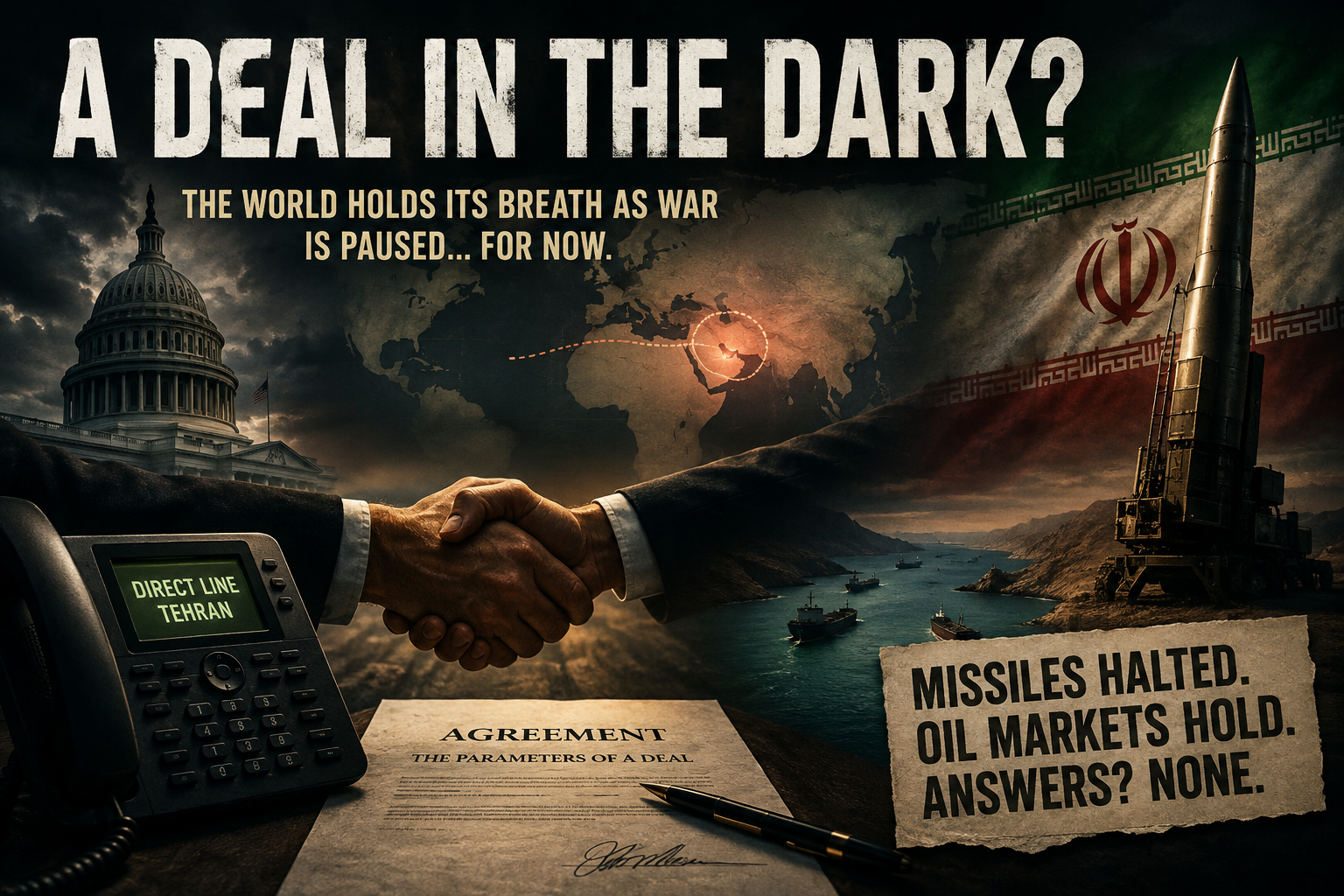
This morning, the world woke up to a sudden and unexpected shift: President Donald Trump announced that planned strikes on Iran had been cancelled. According to his statement, Middle East allies—and even Iran itself—had urged restraint. The reason given was simple, yet opaque: “the parameters of a deal” had been agreed upon.
Just hours earlier, the region appeared to be on the brink. Military escalation seemed imminent. Markets were watching the Strait of Hormuz. Analysts were warning of surging oil prices. Millions of lives sat in the shadow of what could have become another devastating conflict.
Then, just as quickly, it stopped.
One day, the world prepares for missiles. The next, those same weapons are quietly returned to their silos—apparently because of a conversation that took place behind closed doors.
It raises a deeper question about how power operates today. What does it mean when the difference between war and peace can hinge on a single private request? Is this what effective diplomacy looks like in the modern era—or are we witnessing another round of high-stakes geopolitical theater, where the public only sees the outcome, never the script?
For now, details remain scarce. Tehran has offered no clear response. Some global capitals have expressed relief, though even that reaction has been notably restrained. The lack of transparency leaves a vacuum—one filled with speculation, uncertainty, and unease.
🔴 Help keep this independent voice alive and uncensored.
Support independent journalism and help keep Real Raw News going.
👉 Support Chris Wick on GoFundMe
What is clear, however, is how fragile the moment truly is. The line between escalation and de-escalation appears thinner than ever—drawn not in public debate or international consensus, but in quiet negotiations few will ever fully understand.
And for the rest of the world, that uncertainty may be the most unsettling part of all.
About the Author