The temperature of a nation can be measured by what it applauds.
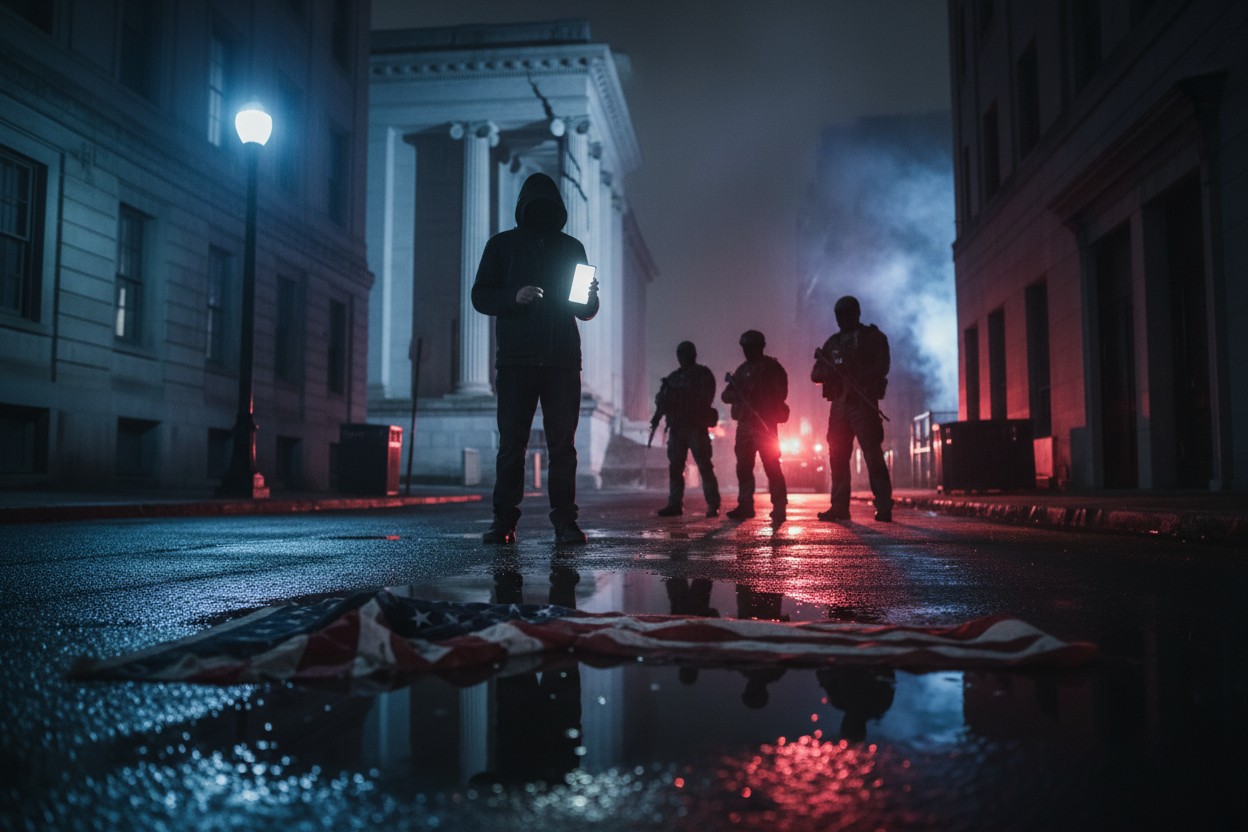
In early 2026, something unsettling is happening in public discourse. Videos circulate. Headlines flare. And beneath them, a quiet shift takes hold: growing approval for government force used outside the guardrails of law.
It doesn’t arrive with sirens.
It arrives with cheers.
This is how societies fracture—not all at once, but through permission.
The Moment the Rules Start to Blur
Every political system relies on a shared agreement that power has limits. Due process. Restraint. Accountability.
When those limits begin to soften, it rarely happens openly. Instead, exceptions are justified. Emergencies are invoked. Language changes. Words like threat, extremist, and enemy start doing heavy lifting.
🔴 Help keep this independent voice alive and uncensored.
Support independent journalism and help keep Real Raw News going.
👉 Support Chris Wick on GoFundMe
Recent incidents involving federal enforcement actions have become symbols rather than facts—used to signal loyalty, not to ask hard questions. The details matter less than the reaction.
Once a significant portion of the public begins to celebrate state violence against those they dislike, the social contract quietly cracks.
How Violence Is Normalized Without Saying Its Name
History shows a pattern that repeats with eerie consistency.
First comes dehumanization.
Then moral shortcuts.
Then the quiet suspension of rules for the “greater good.”
No slogans announce it. No single law defines it. The transformation happens culturally before it ever becomes official.
The danger isn’t that the state acts forcefully. States always have that capacity. The danger is when citizens demand it—and stop caring how it’s done, or to whom.
At that point, the machinery no longer belongs to anyone. It only grows.
The Illusion of Control Through Tribal Power
There is a recurring belief in divided societies: that expanded state power is safe if it’s aimed at the other side.
That belief has never aged well.
Political factions come and go. Institutions remain. Powers granted today do not dissolve tomorrow. They wait. They adapt. They get reassigned.
The tools built to target one group inevitably find new targets. This is not cynicism. It is institutional gravity.
History doesn’t punish hypocrisy immediately. It documents it patiently.
When Principles Become Optional
The most destabilizing moments are not when laws change, but when values do.
Support for civil liberties tends to shrink when fear grows. The same voices that once demanded restraint begin making exceptions. The same arguments once rejected are recycled—just with new villains.
What disappears in that process is universality. Rights become conditional. Protections become partisan.
That is not strength. It is erosion.
The Boomerang Effect of State Power
Every expansion of unchecked authority creates a future reckoning.
What feels like security to one administration can feel like oppression to the next. Labels shift. Priorities invert. Yesterday’s allies become tomorrow’s suspects.
The state does not remember who cheered.
It remembers what it was allowed to do.
And once allowed, it rarely forgets.
Avoiding the Slide Into Internal Conflict
Civil conflict does not begin with armies. It begins with trust breaking down—between neighbors, institutions, and reality itself.
The antidote is not louder politics. It is quieter discipline.
Principles applied consistently.
Process valued over outcomes.
Human dignity defended even when it’s inconvenient.
These are not abstract ideals. They are practical safeguards against escalation.
Choosing Restraint in a Reactive Age
The most radical act in a polarized environment is refusal—refusal to cheer harm, refusal to reduce people to labels, refusal to trade law for vengeance.
Decentralized information, economic independence, and local resilience matter not because collapse is inevitable, but because concentration of power always carries risk.
History does not demand perfection.
It demands memory.
The countries that survive internal strain are not the ones that punish hardest, but the ones that pause before crossing lines they cannot uncross.
America is being asked—quietly, persistently—what it is willing to excuse.
The answer will shape what comes next.
About the Author