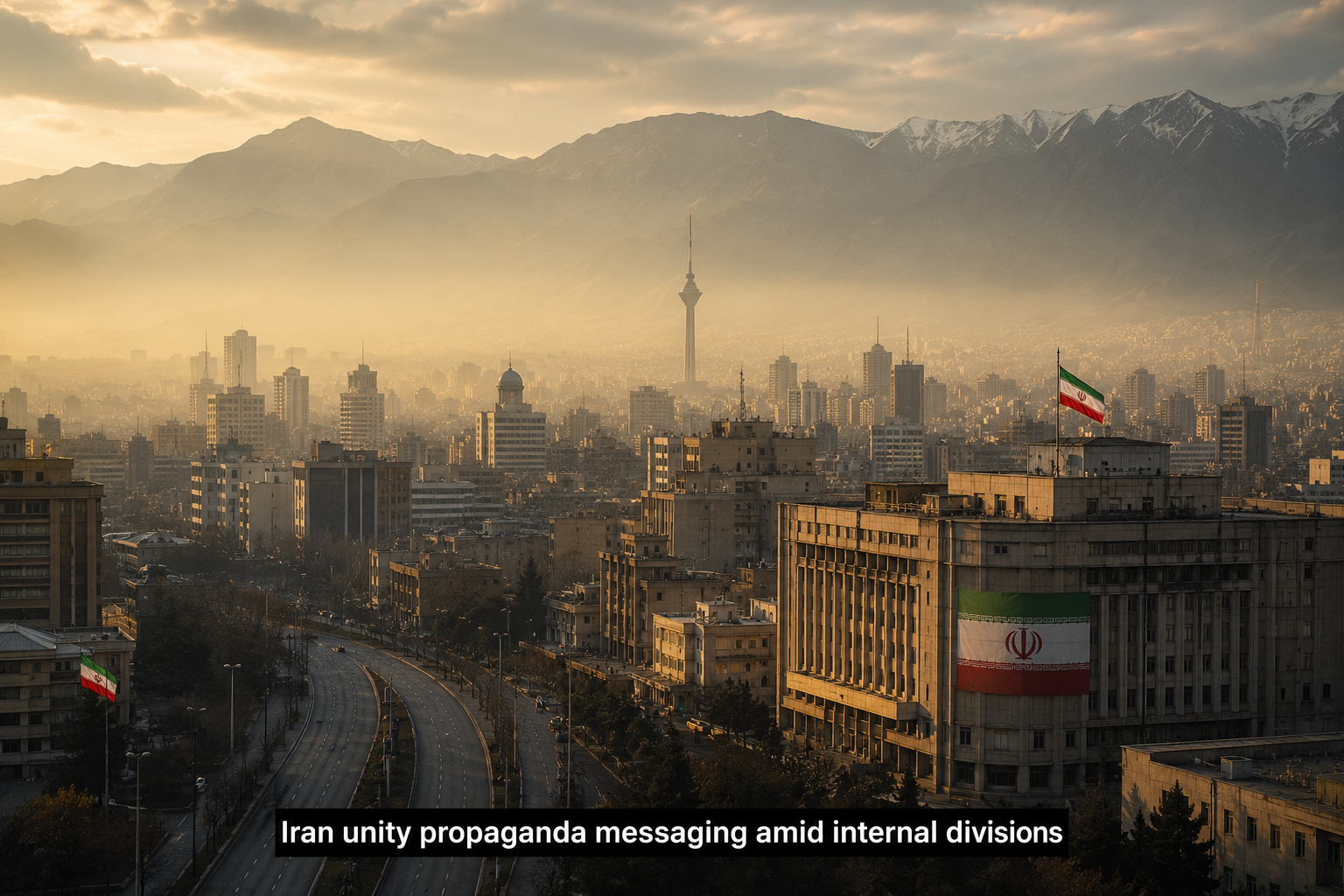
The message coming out of Tehran sounds controlled, almost rehearsed. Unity. Stability. Strength. But behind that carefully managed tone, small fractures are beginning to show—and they’re getting harder to ignore.
What Actually Happened
In recent weeks, Iranian state messaging has intensified its focus on national cohesion, projecting an image of internal alignment despite mounting pressures. Officials and state-linked media have emphasized solidarity across political and social lines, framing the country as resilient in the face of external threats and economic strain.
This coordinated messaging push comes at a time when internal divisions—political, economic, and ideological—are increasingly visible. Analysts point to subtle differences in tone among political factions and a growing disconnect between official narratives and public sentiment.
According to Reuters reporting on Iran’s propaganda strategy, the effort appears designed to counterbalance internal tensions while reinforcing a unified national identity, particularly as regional and global pressures continue to mount.
Why This Moment Matters
Messaging campaigns like this are rarely random.
They tend to emerge when leadership senses instability—not necessarily collapse, but enough uncertainty to require narrative control. The emphasis on unity suggests concern about fragmentation, whether political infighting or public dissatisfaction.
🔴 Help keep this independent voice alive and uncensored.
Support independent journalism and help keep Real Raw News going.
👉 Support Chris Wick on GoFundMe
What makes this moment different is timing. Iran is navigating economic constraints, regional tensions, and shifting alliances. In that context, even small internal fractures carry more weight than usual.
The Pattern Behind the Event
This isn’t the first time Iran has leaned into unity messaging.
Historically, similar campaigns have appeared during periods of:
- Economic downturn or sanctions pressure
- Internal political rivalry
- Heightened geopolitical tension
The pattern is consistent: when external pressure increases, internal messaging tightens.
But repetition can weaken effectiveness. When narratives become predictable, audiences—both domestic and international—start looking beyond the message itself.
Where the Tensions Are Building
Several pressure points are quietly converging:
Economic strain continues to impact everyday life, creating a gap between official optimism and lived reality.
Political divisions, while not always visible on the surface, are influencing decision-making behind closed doors.
Public trust is also a variable. Messaging campaigns depend on credibility, and once that begins to erode, even coordinated narratives struggle to hold.
At the same time, regional dynamics are shifting, forcing Iran to balance external strategy with internal cohesion.
What This Could Signal Next
When a government prioritizes unity messaging, it often signals preparation—for something.
That could mean:
- Anticipation of external escalation
- Internal policy shifts
- Or efforts to stabilize ahead of potential unrest
It doesn’t necessarily point to immediate disruption. But it does suggest awareness that underlying conditions are changing.
And when conditions change quietly, messaging tends to get louder.
Something about this moment feels less like reassurance and more like calibration. The message says everything is aligned. The timing suggests otherwise. And in systems built on control, even small inconsistencies can reveal more than intended.
About the Author