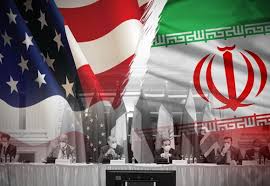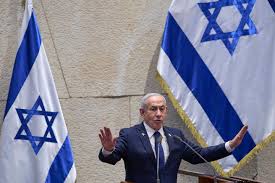
In times of war, silence often spreads faster than dissent.
Across Israel’s 120-seat parliament, the mood today appears unusually unified. Military action has drawn support from leaders across party lines. Former rivals speak with the same language of urgency and necessity. The sense of national alignment is difficult to miss.
And yet, inside the chamber, one voice continues to move in the opposite direction.
Ofer Cassif, a lawmaker from the left-wing Hadash party, has emerged as perhaps the most visible critic of the current war narrative within the Knesset. In an environment where political consensus dominates, his position has placed him far outside the prevailing current.
Cassif argues that the public explanation for the conflict — security threats and regional stability — deserves deeper scrutiny. According to him, the timing and escalation of the war may have less to do with immediate survival than with political calculations unfolding behind the scenes.
He is careful to draw distinctions.
Help keep this independent voice alive and uncensored. Buy us a Coffee
His criticism of the war does not translate into support for Iran’s government. Nor does it dismiss the tensions shaping the region. But Cassif suggests that governments, like individuals, sometimes move for reasons not fully stated in official briefings.
Power. Elections. Personal survival.
These forces, he says, often move quietly beneath the surface of geopolitics.
The argument has not made him popular. Polls indicate that a large majority of Israelis currently support the war effort, leaving Cassif in a small minority within both parliament and public opinion.
In Israel, moments of crisis tend to produce strong political conformity. The pattern is familiar. During previous conflicts, dissenting voices inside the Knesset often found themselves isolated at first, only to be reconsidered much later — sometimes years after the decisions were made.
Cassif believes the same possibility may exist now.
Not immediately. Not easily.
But conflicts have a way of changing the conversation as their consequences accumulate.
Casualties rise. Costs deepen. Questions begin to surface where certainty once lived.
For now, the political establishment remains largely aligned behind the campaign. Military operations continue. Statements of resolve dominate headlines.
Still, the presence of even a single dissenting voice inside parliament reveals something quieter about democratic systems. Consensus may appear complete. But rarely is it absolute.
History has shown that today’s minority opinion sometimes becomes tomorrow’s central debate.
The question is not whether disagreement exists.
The question is when people begin listening to it.
And in a parliament built for 120 voices, it is striking that one of the most controversial positions now belongs to the only one arguing for restraint.
Whether that voice remains isolated — or slowly finds company — may depend less on speeches inside the chamber and more on how the war itself unfolds.
Sometimes, the loudest political signal is not the chorus.
It is the single voice that refuses to join it.