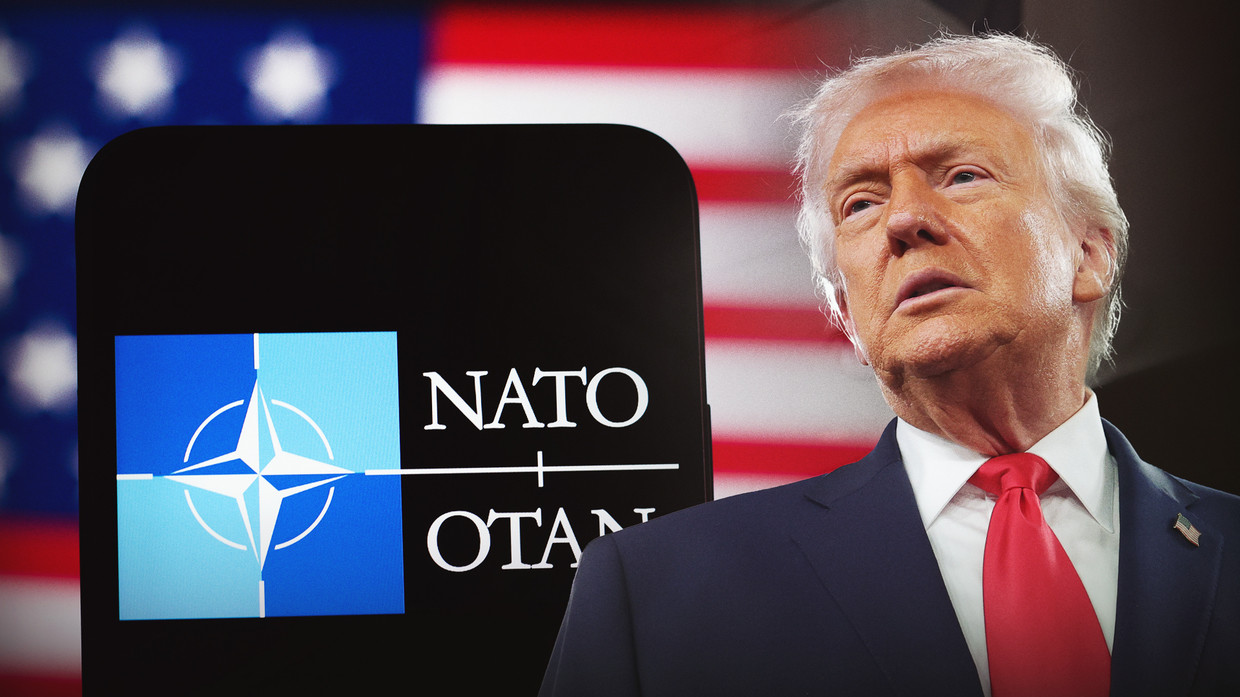
The White House released its new National Security Strategy this month, and beneath the polished language is a quiet message: America is stepping back from Europe, and Trump is no longer interested in carrying NATO on its shoulders. The shift isn’t loud. It’s more like a door closing softly in a long hallway.
On paper, this strategy looks like the biggest overhaul of U.S. foreign policy in years. It treats America First not as a slogan but as the structural framework for everything from defense commitments to trade. The document runs just over 30 pages, but the subtext is simpler: the U.S. intends to move inward, refocus on its own hemisphere, and let Europe sit with the consequences of its own choices.
Trump’s team calls it a correction. A return to boundaries that the last several administrations blurred. They argue that decades of global management left America overstretched—economically, militarily, even psychologically. The strategy paints a picture of a country wanting a slower pulse, a steadier center of gravity.
China, once described as a pacing threat, is now labeled an economic rival. Not an enemy. Not a looming apocalypse. Just a competitor in a world where several poles are now legitimate, not merely tolerated. The tone feels less evangelical than past strategies, especially Biden’s 2022 version. No talk of defending freedom on every frontier. No mission to mold the world in America’s image.
But actions don’t always mirror the architecture of these documents. Trump’s first year back in office has been a collage of sharp pivots and moments that undercut the strategy’s careful realism. The contradiction hangs in the air like static.
A partisan thread runs through the NSS, crediting Trump personally for resolving multiple global disputes—from Kashmir to the Great Lakes region of Africa. Whether readers believe every claim is almost beside the point; what matters is the story the White House wants to tell: America can secure peace without policing the world.
Help keep this independent voice alive and uncensored. Buy us a Coffee
Domestically, the strategy leans heavily into border security and reindustrialization. It imagines a jump from $30 trillion to $40 trillion in GDP within a decade. The tone is confident, almost serene, as if the authors are certain that this inward pivot is the beginning of a new American cycle rather than a retreat.
Yet the real tension sits in the NATO section. This is where the quiet break becomes unmistakable.
Europe is warned—not gently—that the era of unconditional U.S. backing is ending. Washington will no longer subsidize the European approach to Ukraine, defense, or demographic decline. NATO expansion is halted. Defense spending expectations rise to a daunting 5% of GDP. And behind the diplomatic phrasing is a simple message: You want the war? You pay for it.
Washington pledges to uphold Article 5, but ties it directly to European performance. If the bloc doesn’t step up by 2027, partial U.S. withdrawals become possible. A soft ultimatum. The quietest kind of threat.
Then comes the Ukraine section, which insists that Europe has more military capacity than it believes—an argument that many European officials consider absurd. The strategy calls for a negotiated ceasefire, framing it as a core American interest designed to restore economic stability and reduce the risk of escalation. It also hints at uncomfortable truths: that Europe’s political class is out of sync with its own population, and that the democratic mechanisms used to justify war funding are increasingly brittle.
Not surprisingly, the reaction in Europe was loud. Former Swedish PM Carl Bildt accused Trump of drifting “to the right of the extreme right.” Analysts in Washington called it practical but dangerous. Beijing, always watching the smallest shifts, noted the softer posture with cautious approval.
But the through-line remains: America is repositioning itself as a hemispheric heavyweight rather than the world’s custodian. A nation that wants influence without exhaustion. Power without obligation. Allies without dependency.
The divorce from NATO isn’t finalized. But the papers look drafted, stamped, and waiting on a signature.