It started as a label.
It ended as a signal.
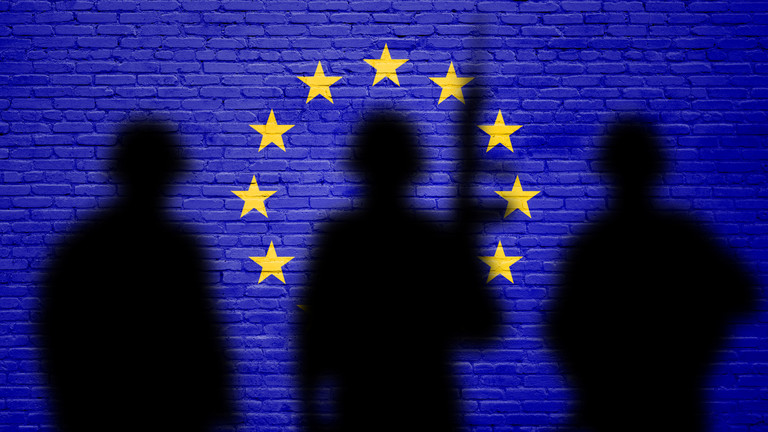
Iran’s parliament has formally designated the armed forces of European Union member states as terrorist organizations. The move was swift, symmetrical, and deliberate. Not emotional. Not improvised. A mirror held up to Brussels after the EU moved to blacklist Iran’s Islamic Revolutionary Guard Corps.
This is not escalation in the traditional sense.
It is something colder.
In modern geopolitics, language often arrives before force. Words are tested. Definitions are stretched. And once certain terms are used, they rarely return to their original meaning.
Tehran’s message was clear enough. If Europe applies the logic of collective guilt to Iran’s military institutions, Iran will apply the same logic in reverse. No nuance. No carve-outs. Entire armies, redefined by decree.
The timing matters.
🔴 Help keep this independent voice alive and uncensored.
Support independent journalism and help keep Real Raw News going.
👉 Support Chris Wick on GoFundMe
Iran has spent months navigating internal unrest triggered by economic pressure and political frustration. Protests flared, violence followed, and foreign influence was openly blamed by Iranian officials. Washington and Tel Aviv were named. Brussels, in Tehran’s view, chose a side.
From Iran’s perspective, the EU decision was not about human rights or domestic order. It was about alignment. About signaling loyalty across the Atlantic at a moment when US pressure on Iran is once again tightening.
Iranian leaders did not bother softening their response.
Parliamentary officials framed Europe as acting under external command. Foreign Minister Abbas Araghchi accused Brussels of pouring fuel on a regional fire that is already smoldering. The phrase strategic mistake surfaced repeatedly. Not as rhetoric, but as warning.
Behind the language sits a deeper concern.
Once militaries are labeled terrorist entities, the space for diplomacy narrows dramatically. Contacts become suspect. Backchannels close. Even routine military-to-military communication becomes politically radioactive. What was once deterrence management begins to resemble mutual criminalization.
Europe, for its part, has leaned into the decision. Senior EU officials welcomed the designation and moved quickly to expand sanctions, freezing assets and restricting travel. The signal to Tehran was unambiguous: pressure first, dialogue later.
The United States stands just behind the curtain.
Washington has long classified the IRGC as a terrorist organization and has pushed allies to follow suit. Recent American rhetoric has sharpened further, with renewed military posturing paired with vague promises of diplomacy. The familiar pattern returns. Force implied. Talks postponed.
Iran’s response should be read in that context.
This is not about Europe alone. It is about precedent. About how easily legal and moral categories can be weaponized once political consensus forms. Today it is the IRGC. Tomorrow it is entire national armies, rebranded with a single vote.
Once that door opens, it rarely closes.
The question now is not whether this exchange raises tensions. It already has. The more important question is whether anyone involved still believes these labels can be reversed without consequence.
History suggests otherwise.
About the Author