I’m getting damn tired of being told what’s best for me by people who will never experience the consequences of their own decisions the way ordinary citizens do.
It’s easy to lecture people about sacrifice when you’re financially insulated from it.
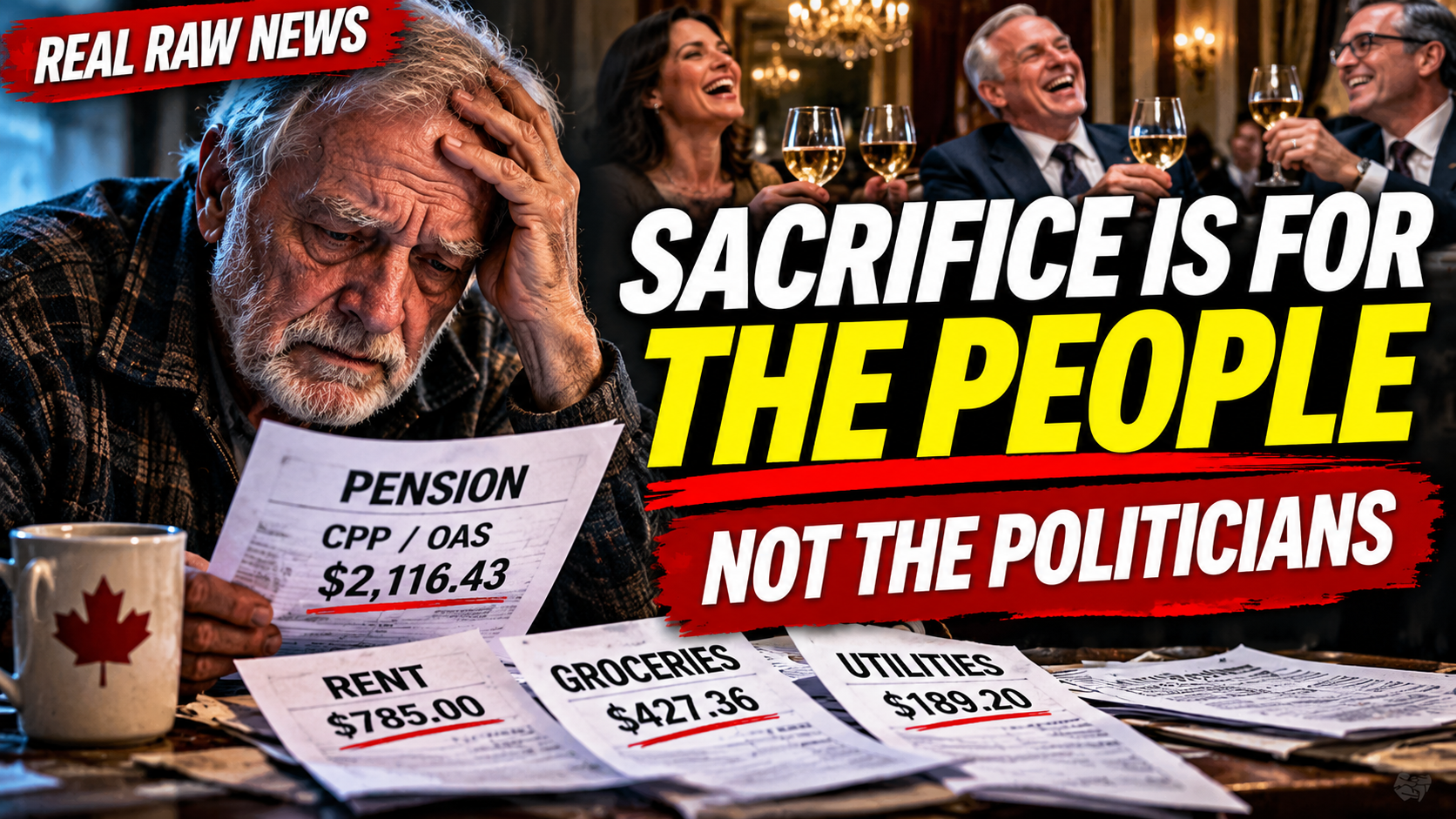
Try living on an ordinary pension for six months. Then come talk to me.
There is a growing disconnect between the financial realities of ordinary citizens and the circumstances of those responsible for making decisions that affect their lives.
For someone with a substantial salary, generous benefits and considerable financial security, an increase in the cost of groceries might be an inconvenience. For someone surviving on a modest fixed income, that same increase could mean going without something essential.
The difference is not merely financial. It is a difference in lived experience.
🔴 Help keep this independent voice alive and uncensored.
Support independent journalism and help keep Real Raw News going.
👉 Support Chris Wick on GoFundMe
Sacrifice Looks Different From the Top
When public officials discuss economic hardship, the conversation often revolves around inflation rates, economic forecasts, fiscal targets and household spending.
But behind those numbers are actual human beings.
There are seniors calculating whether they can afford fresh meat. Parents wondering how they will cover their next electricity bill. Workers discovering that their paycheques no longer stretch far enough to cover their basic expenses.
For people living comfortably, economic restraint might mean postponing a vacation or purchasing a less expensive vehicle.
For someone living near the poverty line, it could mean skipping meals.
Those are two entirely different realities.
The Brutal Reality of Living on a Fixed Income
Retirement was supposed to offer some degree of peace after decades of employment, paying taxes and contributing to society.
Yet many retirees must carefully manage every dollar they receive.
Rent, electricity, transportation, food, insurance and unexpected expenses can quickly consume a modest pension.
Although Canadian public retirement benefits such as CPP and OAS include inflation adjustments, individual household expenses do not necessarily rise at the same rate as the inflation measures used to calculate those adjustments.
A senior cannot negotiate grocery prices. They cannot simply demand that their landlord reduce the rent. And returning to full-time employment may not be a realistic option.
Financial hardship does not disappear because an economic report suggests conditions are improving.
When Economic Statistics Meet Reality
A declining inflation rate does not necessarily mean prices are falling. It generally means prices are increasing more slowly.
That distinction matters enormously to households already struggling with accumulated price increases.
Someone who could barely afford groceries last year does not automatically become financially secure because inflation has moderated.
The same applies to housing, transportation and other essential expenses.
Economic indicators are important, but they cannot fully capture the circumstances of every household. Policymakers need to consider both national economic performance and the purchasing power of people living on limited incomes.
What If Decision-Makers Experienced the Consequences?
Imagine an exercise in which public officials were required to manage an ordinary pensioner’s monthly budget for six months.
No access to personal savings. No supplementary employment income. No financial assistance beyond the benefits available to the person whose circumstances they were experiencing.
They would have to purchase groceries, pay rent, cover utilities and manage unexpected expenses within that limited budget.
Such an exercise would not replace economic expertise or the complexities of public administration. But it could offer a valuable perspective on how financial policies affect everyday life.
Understanding hardship through a briefing document is not the same as experiencing it firsthand.
Accountability Should Include Real-World Outcomes
Governments face competing responsibilities, limited resources and difficult economic choices. Not every unpopular decision is necessarily an irresponsible one.
Nevertheless, the effectiveness of public policy deserves to be measured against tangible outcomes.
Can ordinary citizens afford adequate housing? Can retirees maintain a reasonable standard of living? Can working families accumulate savings? Can people access essential services without experiencing severe financial hardship?
These questions deserve a prominent place in discussions about economic success.
Public policy ultimately affects people, not just spreadsheets.
Dark Final Thoughts
I don’t expect every public official to experience poverty before being qualified to make economic decisions.
But I do expect those making decisions to understand the consequences for people who cannot afford to absorb another financial setback.
There is nothing unreasonable about demanding that public policy reflect the realities of ordinary citizens.
People who have worked their entire lives deserve dignity. They deserve financial security. They deserve to enjoy their remaining years without constantly worrying about their next grocery bill.
Before asking ordinary citizens to make another sacrifice, consider what that sacrifice actually means.
Try living on an ordinary pension for six months.
Then come talk to me.
About the Author