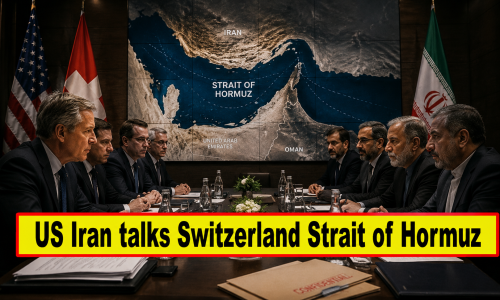
Negotiations between the United States and Iran in Switzerland have entered a second day as diplomatic pressure intensifies following heightened rhetoric tied to the Strait of Hormuz, one of the world’s most critical shipping corridors. The talks are unfolding against a backdrop of political warnings, market sensitivity, and renewed attention on maritime security in the Gulf.
Energy markets and shipping routes reacted cautiously as signals from both sides suggested that while dialogue continues, the underlying disagreements remain unresolved. The Strait of Hormuz, through which a significant portion of global oil flows, has once again become a central reference point in negotiations.
What remains unclear is whether this round of US Iran talks in Switzerland can move beyond temporary stabilization measures into a framework capable of addressing deeper regional and sanctions-related tensions.
What is happening in the US Iran talks in Switzerland
Diplomatic delegations from Washington and Tehran are continuing structured discussions aimed at reducing escalation risks in the Middle East, with a particular focus on maritime security and energy flow stability.
The Strait of Hormuz has emerged as a key pressure point in the talks, reflecting its strategic importance to global oil transport. Any perceived risk to its operation tends to have immediate ripple effects on energy pricing and shipping confidence.
Recent diplomatic signaling has included discussions around temporary measures affecting Iranian oil trade and broader efforts to prevent disruption to maritime traffic, according to reporting from international outlets tracking the negotiations.
Help keep this independent voice alive and uncensored -> Buy us a Coffee <-
Why the Strait of Hormuz remains central to negotiations
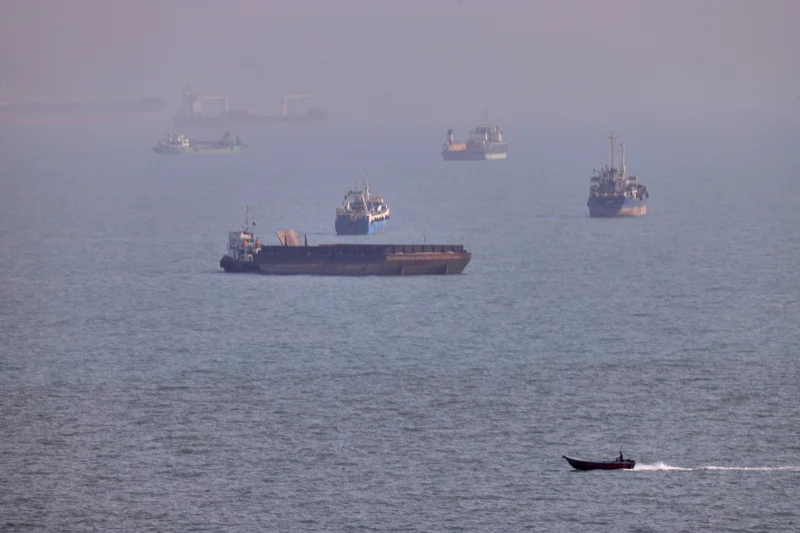
The Strait of Hormuz functions as a narrow but vital passage linking oil-producing Gulf states to global markets. Even limited uncertainty in the region can affect insurance costs, shipping routes, and global supply forecasts.
In the context of the US Iran talks in Switzerland, the Strait has effectively become both a bargaining factor and a risk indicator. Each side is aware that any escalation around maritime access could quickly widen into global economic consequences.
The sensitivity around this waterway is not new, but its re-emergence as a focal point in current negotiations highlights how persistent and unresolved the underlying tensions remain.
Background to renewed diplomatic engagement
The latest round of talks follows a period of heightened geopolitical signaling and renewed concern over regional stability. Previous attempts at structured engagement between the two countries have often shifted between partial agreements and stalled negotiations.
In this case, maritime security and energy exports appear to be at the center of the conversation, alongside broader sanctions-related issues. The inclusion of shipping corridor protections suggests an attempt to isolate and manage one of the most volatile flashpoints in US Iran relations.
Observers note that Switzerland continues to serve as a neutral venue for sensitive diplomatic exchanges, offering a controlled environment for back-channel negotiation efforts.
Reactions and wider geopolitical context
Global markets have been closely watching the US Iran talks in Switzerland, particularly due to the potential implications for oil supply chains. Even minor shifts in expectations around the Strait of Hormuz can influence trading behavior and risk assessments.
Regional actors in the Gulf are also monitoring developments, given their direct exposure to maritime security conditions and export routes. The balance between deterrence, diplomacy, and economic continuity remains delicate.
Institutional responses have so far emphasized caution, with no indication of immediate escalation, but also no confirmation that a breakthrough is near.
Broader implications for energy and security stability
The continued focus on the Strait of Hormuz underscores how tightly linked diplomatic negotiations are to global energy infrastructure. Stability in this region is not only a political objective but also an economic requirement for multiple regions.
If the talks lead to even partial agreements, they could reduce short-term volatility in shipping and oil markets. However, unresolved structural issues between Washington and Tehran suggest that any gains may remain fragile.
The situation also highlights how quickly geopolitical messaging can influence physical trade routes, even in the absence of direct conflict.
What happens next in the US Iran talks
The extension of negotiations into a second day suggests that both sides see value in maintaining dialogue, even as key disagreements remain.
Future progress is likely to depend on whether technical discussions around maritime security and sanctions enforcement can be matched with political commitments on both sides.
For now, the talks remain open-ended, with the Strait of Hormuz continuing to shape both urgency and uncertainty in equal measure.
About the Author