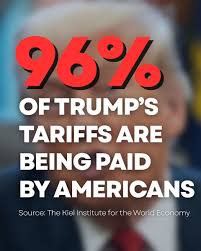
Tariffs are often described as taxes on foreign countries—but in economic reality, they function more like a tax on imported goods that is first paid by U.S. importers and then largely passed on to American consumers through higher prices.
That’s not speculation. It’s backed by extensive research.
How Tariffs Actually Work
When tariffs are imposed, U.S. companies importing goods pay the tax upfront. But in most cases, those costs don’t stay with the companies for long.
Instead, they are passed down the supply chain—eventually reaching retail shelves as higher prices on everyday products.
In other words, the importer pays first… the consumer pays in the end.
What Recent Data (2025–2026) Shows
Federal Reserve research (2026) found that tariffs implemented through 2025 had a measurable and broad inflation effect:
🔴 Help keep this independent voice alive and uncensored.
Support independent journalism and help keep Real Raw News going.
👉 Support Chris Wick on GoFundMe
- Core goods prices rose 3.1% through February 2026
- Tariffs accounted for 0.8 percentage points of overall core PCE inflation
- Pass-through to consumers was described as nearly complete
This means most of the tariff cost ultimately showed up in retail prices.
Real-Time Retail Impact
Independent pricing data from academic and policy research labs shows similar results:
- Imported goods prices increased roughly 6.8%–7% above trend
- Domestic goods also rose around 4.8%, as demand shifted away from imports
- Some of the largest spikes were seen in:
- Clothing (+17.5% in some categories)
- Furniture
- Building materials
- Household goods
This shows an important ripple effect: even domestic products can become more expensive when imported competition rises in price.
Who Actually Pays the Tariffs?
Multiple Federal Reserve studies estimate:
- Around 90%+ of tariff costs fall on U.S. businesses and consumers
- In some early phases, the figure was closer to 94%
Very little of the burden is absorbed by foreign exporters.
Impact on Inflation and Household Budgets
Economists estimate tariffs added:
- 0.5% to 1% to overall inflation (core PCE)
- Without tariffs, goods inflation would have been significantly lower
For households, this translates into real money:
- Estimated $700 to $1,500+ per year per household
- Disproportionately affecting lower- and middle-income families
(who spend a larger share of income on goods like clothing, electronics, and appliances)
Everyday Categories Affected
Price increases are not abstract—they show up in daily life:
- Electronics
- Clothing and footwear
- Auto parts and vehicles
- Coffee, tea, and food imports
- Furniture and home goods
Important Nuance
Economists do note a few caveats:
- A small portion of tariff costs (often under 10%) may be absorbed by foreign producers or business margins
- Effects vary depending on supply chains and product type
- Some domestic industries may benefit from reduced import competition
However, the broader consensus remains consistent: tariffs raise consumer prices overall, even if they protect certain sectors.
The Bottom Line
Across multiple Federal Reserve studies, academic research, and real-time pricing data, the conclusion is consistent:
Tariffs function as a broad-based cost increase on imported goods, and most of that cost is ultimately paid by American consumers through higher prices.
This is why tariffs frequently appear in discussions about inflation, affordability, and household financial pressure.
About the Author